
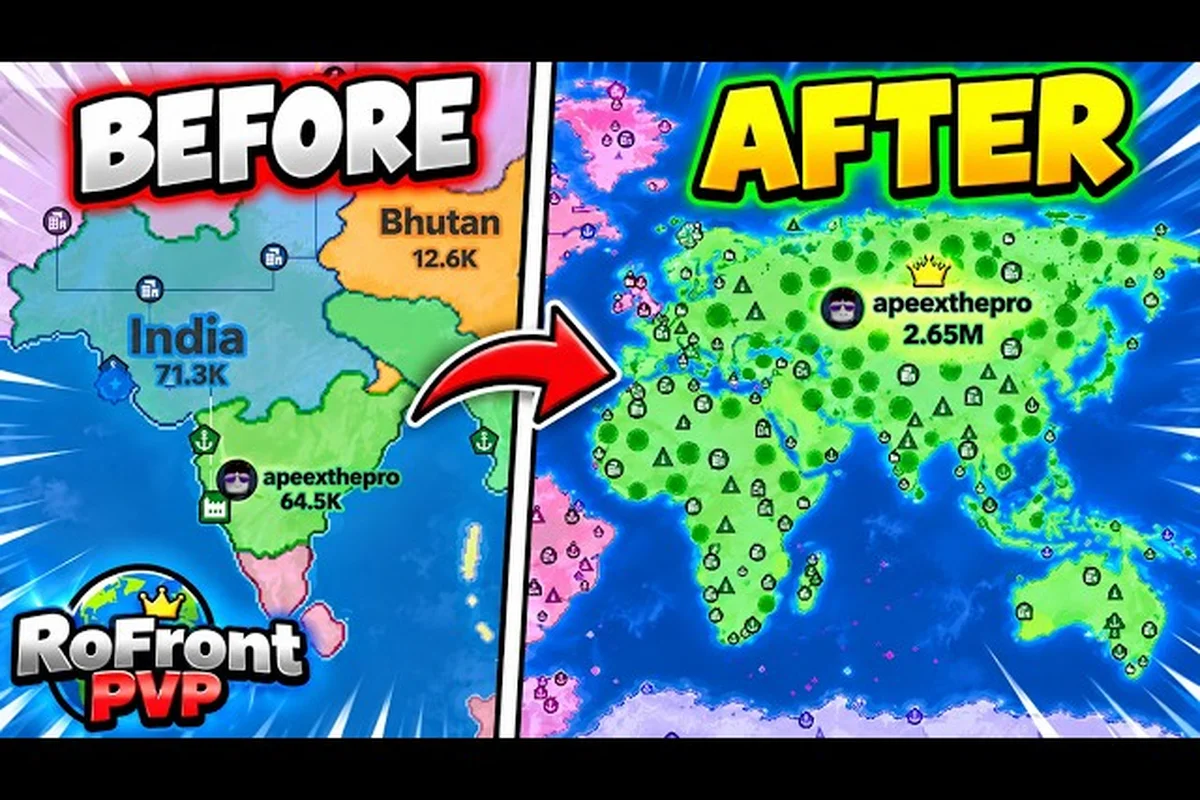
The right number of RoWorld cities depends on map pressure, your economy, and the territory you can defend. Build additional cities when expanding toward a RoWorld port or useful resource area, but avoid spreading construction across too many separate city sites. Each new RoWorld city and RoWorld factory increases the resources your empire must manage, so fewer, well-connected cities often preserve treasury and production more effectively than numerous scattered settlements.
Why the Right roWorld City Count Changes Your Match
There is no official one-size-fits-all number for roWorld cities because each match has different borders, neighbors, income, and military demands. The better question is how many cities your capital can support while preserving enough gold for construction, troop upkeep, and defense. A larger city network can generate stronger connections between your capital and frontier, but every additional settlement may also create another distant border that needs attention.
The official RoWorld game page on Roblox describes a world PvP match with up to 55 players, cities, ports, factories, alliances, and nuclear weapons. It also identifies 80% world control as the victory condition. That objective makes city count a tactical variable rather than a permanent target: the most useful number is the one that supports your current territory, economy, and front lines.
Several factors should guide your answer: distinguish a workable city count from a raw maximum. For example, three connected cities may be operationally stronger than five if the extra settlements stretch toward hostile borders and divert gold from factories, ports, troop upkeep, and defense. Track the number of cities that remain linked to your capital, compare the passive income they produce with their construction and maintenance costs, and adjust as the match changes. Because roWorld’s victory condition is 80% world control, a smaller, cohesive city network can be more valuable than a larger one that leaves gaps for opponents to exploit.
-
Available land determines whether more cities can connect to your capital without forcing a disconnected network.
-
Enemy pressure suggests consolidating nearby territory before creating a settlement deep inside another player’s area.
-
Economic goals determine whether you need more passive territory, stronger production, or naval access.
-
Military commitments limit expansion when your gold is already supporting troops and defense.
-
Map geometry makes a compact group of cities safer than several isolated settlements.
-
Current victory progress changes the balance between adding territory and strengthening what you already own.
A city count that looks efficient on an empty map can become a liability when several opponents appear on your borders. Conversely, a cautious player with only one city may have room to grow quickly if the surrounding land is safe and connected.
Small, Medium, and Large Map City Targets
Map size is a useful starting point, but it is not enough by itself. Your capital position, available coastline, neighboring players, and economic strategy can make a smaller map support the same number of useful settlements as a larger one. Treat the ranges below as planning targets, then adjust them to the board in front of you.
| Map condition | Practical city target | Expansion style | Main reason |
|---|---|---|---|
| Small or crowded map | 2–4 cities | Compact consolidation | Preserves defense coverage and limits exposed borders |
| Medium map | 4–7 cities | Balanced regional network | Supports separate income, production, and coastal roles |
| Large or open map | 7–12 cities | Layered territorial expansion | Creates room for interior, border, and resource hubs |
| Open map with strong economy | 10+ cities possible | Specialized regional clusters | Uses income to maintain several connected centers |
Small map: favor a compact capital region
On a small map, space is often the limiting resource. Your capital and its first ring of nearby territory may be enough to support a stable economy, while additional cities risk creating thin, easily pressured lines. In this setting, two to four cities can be practical when they occupy strong positions, connect cleanly, and cover different approaches into your territory.
Rather than pursuing a raw city total, look for useful adjacency. A second city should extend your reach into a defensible direction, open access to a port, or support an important factory zone. If it merely adds a distant strip of land and increases travel time, it may cost more in defense than it contributes in value.
Medium map: separate income from production
A medium map gives you enough room to develop a compact capital and several specialized districts. Four to seven cities usually creates a good balance between expansion and control, although the exact target changes with your opening nation and neighboring activity.
Use one central cluster to anchor the capital, then consider a second cluster that has a distinct purpose. A coastal city can protect a port or naval route, while an inland city can improve access to factories and troop production. This structure is easier to defend than spreading several cities in a thin line across the map.
Large map: build regional centers instead of isolated points
A large map can support more cities, but only if they form coherent regions. Seven to twelve cities is a useful planning range because it creates several possible centers of gravity without requiring total control of the board. The official game page supports 55-player matches, so large maps may contain many competing nations, and a mature player will have to choose where not to expand.
Build toward regional hubs that can support their own local routes. A city surrounded by hostile territory should not depend entirely on reinforcements crossing the entire nation. Secure nearby land, connect the city back toward the capital, and only then treat it as a dependable expansion point.
Balancing city count against port and factory roles
Cities provide the basic territorial foundation, but a strong network needs specialized roWorld buildings. Ports support coastal access, while factories support a different economic or military role. Understanding the role of each structure prevents a common mistake: adding cities without giving them a clear economic or strategic function.
The official page confirms that cities, ports, and factories are core game features, but it does not publish universal prices, build times, income rates, or upkeep values. That means an exact numerical formula for roWorld how many cities are ideal would be misleading. A better approach compares structural roles and placement needs.
| Building | Primary strategic role | Best placement pattern | Capacity question |
|---|---|---|---|
| roWorld city | Territory anchor and connected expansion | Near useful land with access to the capital network | Can the capital support another border? |
| roWorld port | Coastal access and maritime activity | On a coast connected to a useful land route | Does the shoreline serve your expansion plan? |
| roWorld factory | Industrial or military support | Near secured territory and practical transport links | Does the region need production more than another city? |
| Capital | Political and territorial anchor | In defensible central or coastal territory | Can it remain stable while the network grows? |
When to add a roWorld city
Add a city when it performs at least one job that your capital cannot handle alone. It may secure a new resource area, connect separated land, cover a vulnerable flank, or establish a forward base for later expansion. If a proposed location has no defensible connection to the capital and no distinct value, waiting is usually better than building immediately.
A roWorld city should also support the rest of your roWorld buildings. Before expanding farther, check whether roads and border space can link the new location to your capital, factory zones, and port network. The broader roWorld building guide is useful for comparing construction priorities and placement roles without relying on unpublished costs.
When a roWorld port matters more than another city
A port becomes more valuable when your strategy includes coastlines, maritime movement, or a wide map with land routes that become dangerous. Building a second city may be unnecessary if a port can unlock the same strategic reach with a different footprint. The priority should follow the route you need, not a fixed checklist.
When a roWorld factory is the next priority
A factory can be more useful than another city when your main constraint is production rather than territory. The same principle applies to roWorld how many factories you need: add them where secured territory and transport links can support the role, and avoid creating a scattered industrial network that your capital cannot defend. For deeper production and revenue relationships, see how roWorld gold works.
A Practical roWorld City Expansion Sequence
Expansion works best when each building strengthens the previous decision. Start with a safe capital, create a connected territory, and only then add specialized structures or distant cities. This sequence limits the moment when you have several investments but no stable income or defense covering them.
Opening step: cap the first ring of land
Begin by establishing a capital in a defensible area and capturing useful surrounding land. Your first priorities are stability, access to potential expansion routes, and enough space to support your first economic decisions. Avoid spreading across the board while your borders are still thin.
At this stage, the question of roWorld how many cities to build has a simple answer: usually only the capital and one well-placed city, if the opening map allows it. A second city should improve your position, not merely enlarge your land percentage.
Phase 2: establish income and transport connections
Once the core is secure, identify whether your next bottleneck is passive territory, coastal access, or industrial support. A city fits a territorial gap. A port fits a coastal strategy. A factory fits a production-oriented region. This prevents the common mistake of placing all roWorld buildings in the same location simply because that location is already familiar.
The broader roWorld city construction guide can help with the practical sequence of claiming land and choosing where a new settlement belongs. For example, a coastal city can combine a port with a factory to shorten the route from imported resources to production, while an inland city may be more efficient when it can expand around passive territory. This also makes it easier to judge roWorld city capacity: compare the space reserved for each city, factory, and port rather than counting buildings alone, because transport links determine how many additional settlements remain functional.
Phase 3: connect the next cluster
Move outward only after your capital region can support the new settlements. Connect a second city to the capital through secure territory, and make sure there is a practical route to the relevant port or factory. A connected network is easier to defend because troops and resources do not have to cross a broad area of exposed land.
Phase 4: specialize the frontier
Once the network has multiple centers, use each edge strategically. A border-facing city can support a defense post or other defensive position, while a port can anchor a coastal route. You do not need every city to have the same function; the network becomes stronger when the roles reinforce one another.
Phase 5: audit before the final push
Review the network whenever a neighbor expands, your alliance obligations change, or your territory approaches the 80% objective. For the roWorld how many cities question, this means removing distractions from the count and asking which settlements actively support the victory plan. Cities that expose your capital, duplicate an existing role, or sit behind hostile territory may deserve less attention than your count suggests.
| Expansion stage | Main construction decision | City-count approach | Avoid |
|---|---|---|---|
| Opening | Stable capital and nearby land | Add only the first clearly useful city | Rushing distant territory |
| Early economy | Income and transport foundation | Build a second cluster when secured | Many overlapping city roles |
| Mid-game | Regional specialization | Add cities that support ports, factories, or borders | Disconnected expansion |
| Late game | Concentration toward the objective | Focus on settlements that reduce travel and pressure | Continuing for percentage alone |
How Many Cities and Factories You Can Sustain
A sustainable city count depends on three systems working together: income, military spending, and territory pressure. More settlements can increase economic reach, but they also create more borders, longer travel routes, and potentially more targets for opponents. Your sustainable count is reached when the network remains secure without committing nearly all available income to expansion.
Start with a budget-based audit rather than a building-count target: compare each proposed city with the income, factory output, port access, and troop coverage it adds. For example, if a new city requires several factories and a large garrison but generates only modest tax income, its expansion may reduce overall sustainability. A practical “how many cities” limit is therefore the point where additional settlements still improve your city-and-factory network without leaving too little gold for defense.
-
Estimate the income sources you can rely on. Include only what your current city, port, factory, and territory network can support.
-
Reserve the gold required for troops and defense. Expansion that consumes your entire treasury is fragile even if your land percentage rises.
-
Identify the next build that removes a bottleneck. Add a city for territory, a factory for production, or a port for coastal access.
-
Check the enemy’s ability to reach the new site. A distant settlement surrounded by stronger opponents may require more defense than it earns.
-
Review the network after each major expansion. Look for unsecured gaps, redundant roles, and border cities that are difficult to reinforce.
The roWorld money guide adds useful context on income planning and troop upkeep. Remember that the official game page does not publish a universal income formula, so your practical budget should come from what you observe during the match and from the structure you create.
Distance versus density
Dense networks are usually easier to defend, but they may leave valuable land uncontested. Sparse networks offer more room to grow, yet they demand strong logistics and safe border choices. The best arrangement depends on whether your capital is naturally protected by mountains, water, empty land, or another stable geographic feature.
Quantity versus specialization
Adding another roWorld city may improve your economy, but a specialized port or factory can sometimes deliver the needed strategic value with a smaller territorial commitment. Ask what is missing from the network: if the capital has enough land and income, another city may be less urgent than a building that unlocks the coast or strengthens production.
A simple sustainability checklist
Before approving another settlement, confirm that the current capital region remains stable, the new city has a clear purpose, and the expansion does not require multiple exposed fronts. Also verify that your existing port and factory network remains functional. A city that looks attractive on the map can still be a bad decision if your defense is already stretched across distant borders.
City Count by Player Objective and Match Phase
The best count changes when your objective changes. During the early economy, prioritize roWorld cities only when their production helps fund the required roWorld factories; for coastal expansion, favor city sites linked to a usable roWorld port. When defensive consolidation becomes necessary, fewer cities may be easier to protect, but the final push often justifies additional cities if they increase factories, ports, and income without creating infrastructure bottlenecks. Thus, roWorld how many cities is a dynamic decision based on your economy, map access, and military pressure rather than a permanent rule.
Defensive players
Defensive players should usually build fewer, more mutually supporting cities. The goal is to limit approaches into the capital region, keep reinforcements close, and ensure that every border can be watched. A tight group of cities may offer more security than a scattered chain of settlements, even if the latter reaches a higher land percentage.
Aggressive players
Aggressive players need additional cities when those settlements create new attack routes. A forward base can shorten travel to a target, protect a coastal landing, or connect a planned offensive to the capital. However, an exposed forward city needs support, so aggression should expand in a direction where your existing network can reinforce it.
Coastal specialists
Players pursuing a naval strategy should place fewer interior cities than expected and invest in a strong roWorld port. The coast becomes the main expansion path, and cities should support ports, landing areas, and coastal defense rather than form an unrelated land network. The correct port count depends on coastline quality and enemy naval pressure, which the official page does not quantify.
Economy-focused players
Economy-focused players may support a higher roWorld city count if the land is connected and peaceful. Their cities should form a productive regional chain instead of extending a thin border. Even then, factories and ports may deliver more value than additional cities, particularly when the board is crowded and each new settlement creates another front.
Players near the 80% objective
As the 80% victory condition approaches, extra cities have diminishing value if they are isolated. Concentrate on closing gaps, linking disconnected regions, and reducing the routes opponents can use against you. A smaller network with excellent connectivity may be closer to victory than a larger one that requires the capital to defend several distant clusters.
Mistakes That Distort roWorld How Many Cities Decisions
Most incorrect city counts come from measuring the wrong things. Players often copy another nation’s total, add buildings without a purpose, or assume that more land always equals more security. The following mistakes distort the calculation and should be corrected early.
Counting empty potential
An available tile is not the same as useful territory. Consider adjacency, travel distance, neighboring strength, and whether the capital can actually reinforce the site. A smaller group of well-connected cities can be worth more than a larger group of disconnected claims.
Building every structure early
The official game page lists cities, ports, and factories as available features, but it does not support a universal opening formula. Player-built structures such as defense posts, missile silos, and SAM launchers are also community-reported. Build what your current bottleneck requires instead of trying to complete the roWorld buildings list at once.
Ignoring the road between structures
A port with no useful land connection, or a factory cut off from the capital, may add less value than expected. Plan the corridor before placing the next building. The relationship between capital, city, port, and factory should be visible in your territorial plan.
Expanding while underdefended
Your own expansion can pull attention toward new borders. If your capital is already exposed, adding another city can divide attention and leave both regions underprotected. For example, when a new roWorld city or port lies beyond the current front, the capital’s buildings, factories, and defenses may lose priority before the new settlement is secure. Consolidate first, then resume growth when the front is stable.
Assuming a fixed city-to-factory ratio
There is no published rule tying a specific number of roWorld factories to a specific number of roWorld cities. The practical answer to roWorld how many factories you need depends on whether your bottleneck is income, troop support, transport, or a specialized objective. Treat factories as regional tools and cities as territorial foundations.
Final roWorld Building Plan
The best answer to roWorld how many cities is a range that changes with the board: roughly 2–4 on a compact map, 4–7 on a medium map, and 7–12 on a large map before specialization becomes more important than raw count. The final decision should follow territory, income, coastal access, production needs, and your ability to defend every border.
Treat your capital as the anchor, connect each new city to a useful regional role, and add a roWorld port or roWorld factory when that structure solves a clearer problem than another settlement. If you need a tighter operational sequence, revisit the roWorld border mechanics to evaluate adjacency and pressure before committing to a new city.
Frequently Asked Questions
What is the best number of roWorld cities to build?
There is no published universal limit or ideal count. A compact map often supports 2–4 useful cities, while medium and large maps can support roughly 4–7 and 7–12 respectively. Treat those as planning ranges, then reduce the count if new settlements create distant, weakly connected borders or exceed what your economy can defend.
Should I build more roWorld cities or roWorld factories?
Build another city when territory, adjacency, and a new regional center are your main needs. Add a factory when production is the limiting factor and your secured territory can support it. If you already have enough connected land but weak output, a factory is usually the better choice; more cities may add cost without solving the real bottleneck.
How many roWorld ports does one nation need?
A single well-placed port may be enough for an inland or defensive strategy, while coastal expansion can justify additional ports along useful shoreline routes. The official game page does not publish port costs, output values, or recommended counts. Choose a port when it improves maritime access, supports a landing plan, or connects a coastal city cluster to your capital.
Is one roWorld city enough in the opening?
Usually, yes, especially when the capital can secure nearby land and its first expansion route. Another city becomes more valuable once it covers a distinct border, opens a coastal route, or creates a connected regional hub. Building several cities immediately can leave the capital underdefended and spread resources across positions that do not yet have a clear purpose.
How do I know when to stop adding roWorld cities?
Stop when additional settlements duplicate existing roles, require defending disconnected borders, or consume income needed for troops and essential infrastructure. Before expanding again, check whether your capital region is stable and whether a port or factory would solve a more immediate problem. Near the 80% objective, connecting and securing existing territory usually matters more than increasing the city count.