
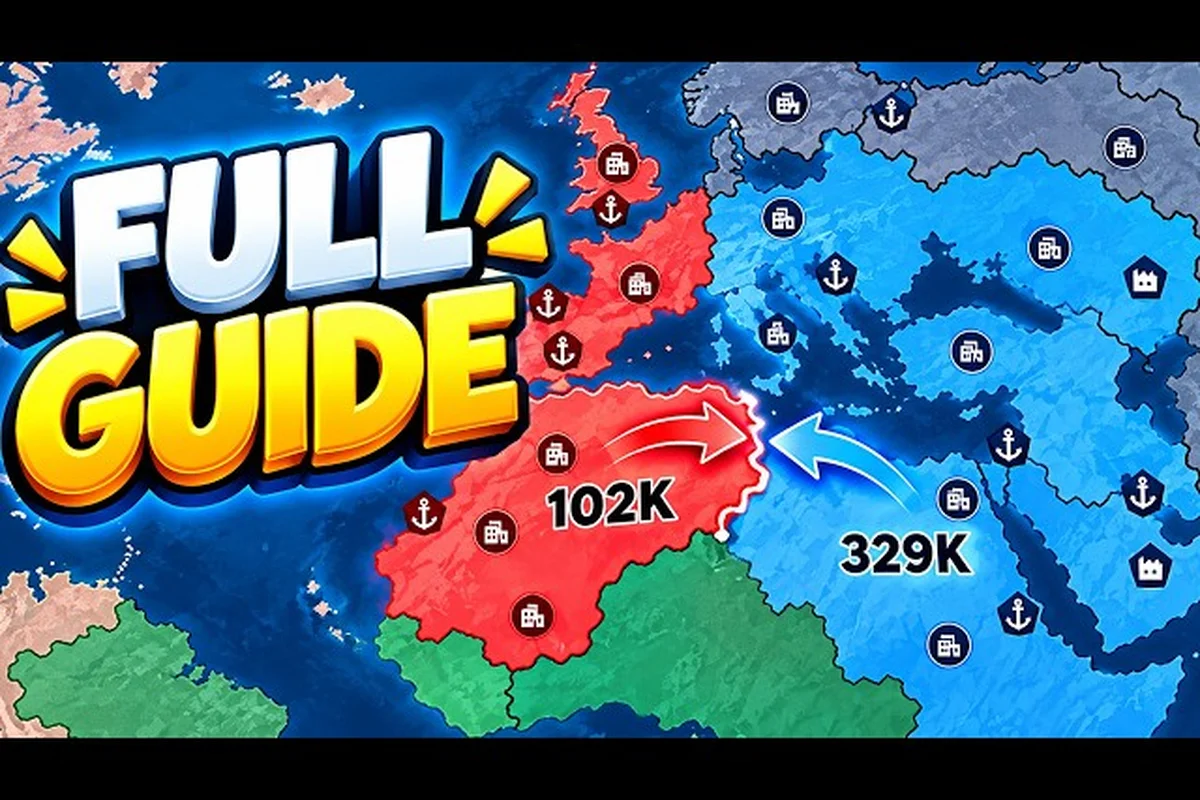
Choosing dependable partners in RoWorld matters because alliances can secure borders, free resources, and create room to expand without opening several wars at once. The roWorld best allies are usually reliable neighbors who communicate clearly, avoid opportunistic attacks, and contribute to shared goals. Learn how to identify strong partners, spot warning signs, handle betrayal, and keep your alliances stable as the map changes.
What Makes the roWorld Best Allies?
The strongest allies in RoWorld are not defined by one spectacular battle or a loud promise. They are judged by their position, behavior, and willingness to share pressure. A neighbor with several exposed borders may be useful, but a distant partner with a peaceful border can be even more valuable because it reduces the number of directions from which your territory can be attacked.
The official RoWorld game page on Roblox describes a strategic world with 88 player nations, hundreds of tribes, cities, ports, factories, alliances, and nuclear weapons. It also lists a server capacity of up to 55 players and an 80% world-control victory condition. These details show why relationships matter: even an experienced nation can be pulled in several directions when the map is crowded and victory depends on controlling a large share of the world.
The Traits of a Durable Partner
A good alliance partner is predictable without being passive. Reliability comes from consistent behavior, not from making promises that disappear after the first conflict. Watch how potential allies respond when they are not under immediate pressure, because that is often the clearest test of their long-term intentions.
| Observable trait | Why it matters | Best sign |
|---|---|---|
| Predictable border behavior | Reduces surprise attacks | The partner avoids sudden military moves near shared territory |
| Clear communication | Reveals priorities before disagreements grow | Messages state goals, limits, and timing |
| Balanced contribution | Keeps the alliance from becoming one-sided | Support changes with the situation rather than always favoring one nation |
| Respect for agreed limits | Preserves trust after temporary pressure | The partner avoids using a temporary weakness as an opening |
| Stable territorial outlook | Supports a longer planning horizon | Expansion plans do not constantly target the same border |
A dependable partner may still be ambitious, and ambition itself is not a warning sign. The better question is whether the partner's ambitions conflict with yours. Someone can be honest about wanting a port while being a poor alliance fit for you, especially if both plans require the same coastal land.
Why Geography Changes the Value of an Ally
Border position often matters more than personality. A partner beside your territory can reinforce a vulnerable side, but it can also expose that side if relations collapse. A partner across a buffer zone may offer less immediate military protection while giving you room to maneuver between dangerous neighbors.
| Ally position | Strategic benefit | Strategic risk | Best use |
|---|---|---|---|
| Shared border | Quick support and visible coordination | A broken alliance can create a direct front | Close borders with clear limits |
| Buffer separation | Reduces immediate pressure | Slower reinforcement and fewer shared actions | Preserve space between major rivals |
| Coastal position | Access to ports and flexible movement | A coastal asset may attract opportunists | Coordinate access and defense priorities |
| Interior position | Stronger control over nearby land | Less direct access to distant fronts | Support expansion through land control |
| Peripheral position | Fewer immediate threats | Limited influence over central conflicts | Trade, technology, or nonaggression cooperation |
This geography-based assessment belongs naturally within broader RoWorld strategy planning. Before committing to a partner, map shared borders, exposed approaches, nearby rivals, and the resources each side wants. An ally that complements your weaknesses is usually more valuable than one that merely duplicates your strengths.
Comparing Strong Partners and Risky Choices
The roWorld best allies usually combine positional usefulness, reliable conduct, and complementary goals. By contrast, the roWorld worst allies are not always hostile. Some are simply unstable, overextended, or likely to draw you into a conflict that does not advance your position. A useful comparison therefore separates the ally's current ability from its potential future behavior.
Reliable, Transactional, and Dangerous Profiles
| Ally profile | Strength | Warning sign | Recommended approach |
|---|---|---|---|
| Reliable coordinator | Responds clearly and shares pressure | May insist on controlling every decision | Give clear responsibilities and decision deadlines |
| Transactional partner | Offers useful trade or military value | Interest changes whenever costs rise | Keep agreements narrow and reviewable |
| Ambitious opportunist | Can grow quickly and offer strong support | Expansion repeatedly overlaps your plans | Define borders, goals, and exit terms clearly |
| Overextended nation | Has multiple commitments and enemies | Cannot respond when needed | Treat support as uncertain and avoid dependence |
| Secretive actor | Keeps plans and messages vague | Refuses reasonable clarification | Do not share sensitive plans or excess resources |
| Openly hostile partner | Rejects cooperation or attacks without warning | Immediate military threat | Shift to containment, defense, and negotiation only if useful |
No single profile is automatically good or bad. A transactional partner can be extremely useful when both sides understand the exchange, while an ambitious partner can become an excellent long-term ally if boundaries are respected. The danger comes from relying on a partner whose incentives have changed without giving you time to adjust.
Signs That an Alliance May Become a Problem
Watch patterns rather than isolated statements. A partner that misses one response may simply be busy, but a partner that repeatedly delays communication, approaches your exposed borders, pressures your weakest ally, or changes agreed objectives deserves closer attention. These are behavioral warning signs, not proof of betrayal.
The most useful roWorld diplomacy tips are defensive ones because they preserve options. Keep your military concentrated enough to respond to one front, maintain a supply of alliances that do not depend on one partner, and avoid revealing a complete offensive plan until the moment it matters. A partner who knows every detail of your strategy can exploit your timing even if no promise has been broken.
| Warning sign | What it may indicate | Immediate response |
|---|---|---|
| Sudden troop movement near your border | Possible probing or preparation | Move reserves, verify intentions, avoid opening a second front |
| Repeated exclusion from major decisions | Declining trust or private coordination | Request a clear agenda and prepare alternatives |
| Pressure to attack an unprofitable target | An attempt to redirect your strength | Evaluate the goal independently before committing |
| Sudden hostility toward former partners | Higher risk of opportunistic attacks | Secure borders and reconsider exclusive commitments |
| Demands for resources without a clear plan | Unbalanced dependence | Exchange only what the stated objective requires |
| Public blame for shared failures | Reputation damage without visible repair | Clarify the record calmly and renegotiate duties |
Community observations also suggest that truces, non-aggression pacts, alliance chat, and a traitor mark are used in RoWorld, but the official page does not publish exact rules or penalties for them. Treat those features as useful community reports, not guaranteed enforcement. Your safest response to uncertainty is preparation rather than a claim that the game will punish a traitor in a specific way.
Handling Traitors Without Losing the Map
Learning roWorld how to deal with traitors is less about punishment and more about containment. When an ally reverses course, your first objective is to stop the betrayal from becoming a simultaneous disaster on two fronts. Ambitious enemies, then controlled borders, then restoration of a workable relationship. Revenge comes last because it often consumes the resources needed to survive.
A Four-Step Betrayal Response
-
Verify what changed. Separate a suspected betrayal from a temporary disagreement, unclear action, or isolated incident. Check the partner's visible military behavior, public statements, and recent actions before making an irreversible response.
-
Protect the exposed border. Reinforce the threatened approach, preserve mobility, and stop unrelated commitments from draining your attention. The military guide to winning a RoWorld war is useful here because border defense must work alongside production and attack timing.
-
Break the enemy's expectations. Do not leave one clear defensive line while another remains unguarded. Threatening one border may be a feint, so distribute attention in a way that makes a second attack less rewarding without guessing which side will strike first.
-
Reopen narrow contact. A former partner can still be a useful buffer, trade contact, or counterweight against a larger rival. Negotiate on specific matters rather than demanding a complete emotional reset.
| Stage | Primary goal | Avoid |
|---|---|---|
| Immediate containment | Stop the traitor from taking valuable land | Racing straight into the former ally's strongest position |
| Stabilization | Consolidate defensible borders | Spreading troops across every threatened direction |
| Reputation recovery | Separate credible partners from opportunists | Publicly threatening every former ally |
| Conditional cooperation | Negotiate limited buffers or trade | Sharing the same sensitive commitments again |
Separating One Betrayal From a Reputation Collapse
A traitor should not automatically become the focus of every alliance you make. Players who watch for consistent patterns can identify which relationships are repaired and which are not. A useful distinction is between a single breach and a repeated strategy of opportunism. The first may justify caution, while the second calls for a much stricter approach to future agreements.
| Reputation pattern | Likely interpretation | Future boundary |
|---|---|---|
| One disputed action | Individual judgment may have failed | Clarify terms and monitor the next response |
| Repeated broken commitments | Reliability is low | Share fewer resources and keep alternatives |
| Betrayal followed by repair | Partner values the relationship | Re-engage gradually with specific limits |
| Public coordination against other allies | Strategic manipulation | Avoid exclusive dependence and document conduct |
| Open hostility toward everyone | Highest immediate threat | Contain the border before considering negotiation |
The RoWorld alliance guide can help you structure limits and responsibilities more clearly. Even after a betrayal, a written or clearly stated agreement should identify the shared objective, the area of cooperation, the time limit, and what happens if either side changes direction. Clear terms cannot guarantee honesty, but they reduce ambiguity.
Preventing a roWorld Multi Front War
A roWorld multi front war is usually the result of accumulating obligations, not one unlucky decision. An alliance with a northern neighbor may begin as defensive cooperation, another partner may pull you toward a distant conflict, and a separate border may become unstable while your army is committed elsewhere. By the time three enemies attack together, your strategic options have already narrowed.
The official game page's description of ports, factories, and nuclear weapons indicates that the map contains several strategic systems that can pull attention in separate directions. Since the developer does not publish exact upkeep, damage, or timing values, the safest approach is structural: decide which fronts can be stabilized, which can be delegated to allies, and which can be tolerated temporarily.
A Front-Reduction Checklist
Use this sequence before accepting another major commitment:
-
Map active fronts. List every opponent who can realistically threaten land, not merely names on a distant war board.
-
Classify urgency. Separate immediate threats from distant ambitions and opportunistic enemies who need an opening to attack.
-
Choose one decisive front. Avoid dividing your strength among several fronts that are each large enough to demand attention.
-
Preserve a reserve. Keep the ability to respond when an ally is tested or a second front opens unexpectedly.
-
Delegate containment. Give a trusted partner a limited role rather than transferring the whole problem.
-
Review regularly. Reassess after every major expansion, betrayal, or loss of an ally.
| Commitment level | Risk of adding it | Better response |
|---|---|---|
| Defensive support for a trusted ally | Moderate | Accept if it reinforces an existing front |
| Joint attack on a distant target | High | Require a clear gain and a withdrawal plan |
| New alliance with a distant power | High | Begin with trade, information, or a nonaggression understanding |
| Defense for a chronically unreliable partner | Very high | Offer limited help or refuse if it exposes the core territory |
| Two simultaneous offensive commitments | Very high | Choose one and delay the other |
That is the central roWorld avoiding multi front war principle: every new promise must be measured against the number of unresolved threats you already carry. An ally is not automatically good for you if accepting its request makes every other border less secure.
Designing Alliances That Reduce Pressure
The best alliances act as front loaders, not additional obligations. A partner should absorb a threat, share information, provide valuable resources, or create a stable buffer. If your relationship adds another demand for attention without contributing one of those benefits, the alliance may be increasing stress instead of reducing it.
| Alliance contribution | How it lowers pressure | Question to ask |
|---|---|---|
| Defensive partner | Covers a border while you address another | Can this partner hold without constant reinforcement? |
| Economic partner | Reduces pressure to gather resources elsewhere | Does the exchange create lasting value? |
| Buffer partner | Separates you from a dangerous rival | Does its position reduce the number of direct threats? |
| Strategic partner | Distracts a rival from a vulnerable area | Does its objective align with mine? |
| Informational partner | Reveals enemy preparation | Can we exchange useful information without sharing sensitive plans? |
When a war club forms, inspect its membership for internal conflicts. If two members border each other, their coordination may be fragile. If one member has a history of opportunistic expansion, the group may become unstable. The RoWorld world war guide offers further context on team structures and late-game diplomacy, but the immediate question remains: does this coalition reduce my number of active fronts?
Building a Long-Term Roster of roWorld Best Allies
Strong relationships are best developed before a crisis. Start with limited cooperation, observe consistency under pressure, and increase commitments only after trust has evidence behind it. A proven ally may support a war, share resources, and accept a defensive role, but even the best relationship should retain a clear purpose and a way to reduce exposure if circumstances change.
A Relationship-Building Sequence
| Stage | Action | Evidence of readiness |
|---|---|---|
| First contact | Exchange basic intentions and identify shared borders | Consistent, civil communication |
| Limited cooperation | Share a small amount of information or arrange limited aid | No surprise boundary moves |
| Operational trust | Coordinate one contained action | Both sides follow the stated plan |
| Strategic dependence | Share meaningful resources or front coverage | Reliability remains consistent under pressure |
| Durable partnership | Support major goals while preserving clear limits | The partner respects the partnership even when tempted elsewhere |
The sequence should be gradual. Sharing plans early can be valuable when trust exists, but it also gives a potential opponent time to prepare. Share enough for coordination while retaining some flexibility, especially when the relationship is new or the partner borders an active rival.
Keeping Alliances Valuable After Victory
A strong ally still needs a reason to stay cooperative. Shared threats can disappear, borders can change, and a former partner may begin competing for the same resource. Continue making the relationship useful by refreshing goals, acknowledging contributions, and discussing what each side wants next.
A good periodic review asks four questions:
-
Is this alliance still reducing a real threat or providing a real benefit?
-
Have land, leadership, or strategic priorities changed since the last agreement?
-
Is the arrangement balanced enough that neither side feels trapped?
-
What would each side do if the other joined a different coalition?
These questions also help identify the roWorld worst allies without making accusations. Some players become unreliable because their position has become untenable, not because they never cared. An honest partner may reveal that a relationship has changed, whereas a deceptive one creates confusion until the damage is done.
Practical roWorld Diplomacy Tips for Every Stage
Early-game diplomacy is about buying time. The RoWorld beginner guide can help you settle your first capital, understand expansion, and establish an economy, but the most important diplomatic action is to avoid making every neighboring nation an enemy. Choose a limited number of partners whose positions are complementary, then concentrate on development instead of spreading obligations across the map.
Middle-game diplomacy is about converting friendships into reliable positions. Keep a small trusted circle, communicate before borders change, and distinguish requests that improve your position from requests that merely consume your army. Late-game diplomacy is about coalition discipline: a group may be powerful, but internal distrust or a traitor can expose several members at once.
| Game stage | Best diplomatic objective | Common mistake | Better habit |
|---|---|---|---|
| Early game | Secure a stable neighborhood | Promising every ally support | Partner with a few nearby, compatible players |
| Middle game | Strengthen borders and specialize | Accepting unlimited obligations | Match each commitment to a clear benefit |
| Late game | Prevent coalition fractures | Trusting every member equally | Distinguish reliable partners from temporary allies |
| After betrayal | Contain and rebuild | Chasing an immediate counterattack | Secure the weakest border first |
| Near victory | Avoid unnecessary last-minute wars | Opening a new front for prestige | Protect the territory required to win |
Community footage shows a real-time progression from starting nation and capital placement to expansion, economy building, diplomacy, and conflict. That sequence supports a simple lesson: relationships are part of the economy. Every hour spent negotiating should create a clearer border, a safer trade route, or a stronger defensive network. If an arrangement produces none of those results, it may be activity without progress.
The final principle is to keep diplomacy revocable in practice even when trust remains. Maintain alternative supply routes, keep a reserve army, avoid placing every important asset beyond one ally's reach, and review your map whenever the balance shifts. A reliable partner is an advantage, not permission to become dependent.
Frequently Asked Questions
Who are the roWorld best allies for a new nation?
The roWorld best allies for a new nation are usually nearby players with peaceful borders, clear communication, and compatible goals. Choose partners who can protect a shared direction without demanding constant support. Start with limited cooperation, watch their behavior under pressure, and avoid tying your entire strategy to one relationship before trust is proven.
How can I identify the roWorld worst allies early?
Watch for repeated broken promises, sudden movement near your border, pressure to attack targets that do not serve your interests, and a refusal to clarify plans. These patterns are stronger evidence than personality or occasional silence. Keep commitments limited, preserve alternatives, and treat a partner’s incentives as more reliable than their reassuring words.
What should I do after an ally betrays me?
Stop the immediate damage before pursuing revenge. Secure the exposed border, concentrate your forces on the most dangerous front, and separate the traitor from other potential enemies through communication with neutral and allied players. Then decide whether a narrow buffer, trade, or nonaggression arrangement is still possible; do not assume every former alliance must become a permanent war.
How do I prevent a roWorld multi front war?
Limit the number of active obligations and identify every opponent who can realistically threaten your land. Keep a strategic reserve, choose one decisive front at a time, and avoid distant offensives that divide your attention. Allies help most when they absorb a real threat, share useful resources, or create a buffer rather than simply adding another promise you must fulfill.
Is it better to build a large alliance or a small trusted one?
A small trusted group is usually easier to coordinate and less likely to collapse under pressure. Large alliances can be valuable, but they need compatible members, clear roles, and a shared purpose. If every member expects the strongest nation to handle every front, the coalition may lose cohesion precisely when coordinated action matters most.