
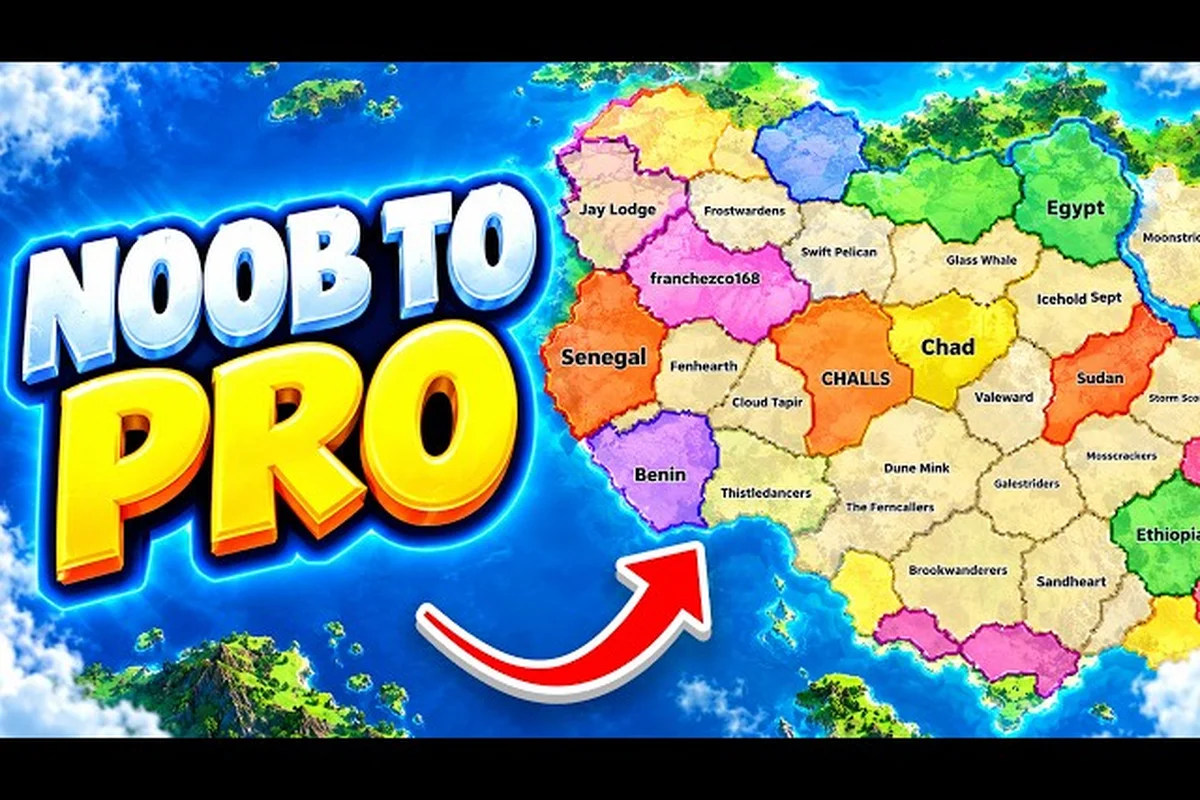
RoWorld how to invade succeeds when your army, warships, and transport ships arrive in the right order rather than as separate operations. First, build a durable land force and use transport ships to stage troops near the target nation; then send warships to pressure coastal defenses and open a landing route. Keep missile interception ready during the advance, because losing key units to a nuclear strike can break the invasion before your formations reach the front.
roWorld how to invade with a prepared war machine
An invasion in RoWorld is rarely one large push. It is a chain of preparations: build an economy, raise troops, secure a port, position warships, move the army, and choose when to pressure the enemy’s borders. The official Roblox page confirms that cities, ports, factories, alliances, and nuclear weapons are part of RoWorld, while community gameplay reports describe troops as the main attack resource. The important lesson is that successful invasions depend more on coordination than on a single unit.
Set the objective before the first attack
A player who chooses a target before preparing will usually attack with whichever army happens to be available. That is reactive and can leave your strongest cities exposed. A better approach is to define the objective first: capture territory, pressure a capital, force a surrender, or protect an ally from a larger rival. The objective determines whether you need a broad land push, a naval landing, or a limited raid.
The table below provides a qualitative comparison of common invasion goals. Since roWorld does not publish official values for attack percentages, troop multipliers, building costs, or damage, it is more useful to compare the required force mix and operational constraints than to invent precise numbers. For example, a coastal capture depends on transport ships and naval protection, while capital pressure requires concentrated troops and control of roads that allow defenders to reinforce. A limited retaliation mission can succeed with a smaller force, but only if it avoids the economic trap of sending every available unit away from the front.
| Invasion objective | Main requirement | Best pressure point | Common failure |
|---|---|---|---|
| Border expansion | A dependable land force | Exposed frontier | Attacking before the economy supports more troops |
| Capital pressure | Concentration of troops | Roads and nearby territory | Leaving defenders free to reinforce |
| Coastal capture | Landing capacity and sea control | Ports and coastal cities | Sending transports without protection |
| Defensive retaliation | A quick, concentrated force | Enemy staging areas | Chasing distant targets and ignoring home defense |
| Nuclear deterrence | Strong border and air defense | Enemy missile infrastructure | Treating a single weapon as a complete strategy |
The same planning principle applies to economic development. If you need more gold, factories, or a port, work through the city and factory construction guide before committing every available troop to a campaign. A larger army is useful only when it can keep moving and remain supplied.
Build the invasion in layers
A dependable invasion has four layers: economic support, land strength, transport capacity, and command coordination. Each layer solves a different problem. Gold supports the buildup, troops hold ground, ships move or protect forces, and coordination keeps those parts acting at the same time.
| Layer | Purpose | What to watch for | Dependency |
|---|---|---|---|
| Economic support | Produce resources for continued operations | Stable cities and factories | Unclaimed expansion and production buildings |
| Land strength | Defend territory and pressure borders | Recruitment and concentration | Gold, cities, and secure supply lines |
| Transport capacity | Move troops across water or difficult terrain | Safe loading and landing points | Ports and warships |
| Command coordination | Prevent divided or mistimed attacks | One shared target and timing | Clear priorities for every force |
This framework also explains why an invasion should not begin with every unit immediately. First, create enough economic support to replace losses. Then assemble a land force capable of holding a bridgehead. Add transport ships only when there is a coastal route worth using. Finally, bring warships to screen the approach. The result is not a giant formation of unrelated units; it is a chain in which each part protects the next.
roWorld how to build an army before attacking
The most common failed attack is an army that looks large but cannot operate as a unit. Troops may be spread among distant cities, assigned to passive borders, or produced without a clear gathering point. Building an army for an invasion requires a recruiting plan, a concentration plan, and a supply plan.
Recruit with a target, not a quota
Since RoWorld does not publish official troop costs or attack ratios, avoid treating any community number as a guaranteed rule. Instead, estimate what your economy can sustain and decide whether the army will operate as a main force, a reserve, or a raiding detachment. The military overview for RoWorld is useful for comparing the larger role of troops, warships, and other defensive assets.
| Army component | Main role | Best deployment | What it should not do |
|---|---|---|---|
| Main assault force | Pressure the chosen front and hold captured ground | Main invasion route | Chase distant targets |
| Mobile reserve | Answer breakthroughs or exploit weak borders | Near the staging area | Remain trapped in one distant province |
| Border garrison | Protect cities and production centers | Home and allied frontiers | Join the offensive without replacement troops |
| Coastal force | Secure landing areas and ports | Naval approach | Enter an enemy port without screening |
| Raider detachment | Distract defenders or test defenses | Secondary front | Drain the main army’s strength |
Recruitment should be judged by the mission. A capital push needs concentration at one border, while a multi-front strategy needs reserves and garrisons elsewhere. Building a large force and dividing it evenly is usually less effective than creating a clear primary group and maintaining a smaller secondary force.
Concentrate troops near the invasion route
After recruiting, bring units together before contact. Concentration reduces the number of directions your enemy can pressure and makes reinforcement more likely. The target is not necessarily the enemy capital; it may be a coastal city, a border intersection, or a transport route that gives your force a shorter path to the center.
Use three checkpoints before launching the attack: first, identify the likely landing zone or border crossing where your land army can unload without exposing transports; second, confirm that warships arrive before hostile fleets can contest the coast; and third, place a reserve stack near the staging route for an enemy counterattack. For example, against a coastal rival, pair transports with an escort screen and delay the land push until the landing area is secured, since an army that arrives before its landing zone is held loses its numerical advantage.
-
Assembly: Can your main force reach the staging area without crossing exposed territory?
-
Readiness: Are warships, transports, and land troops scheduled to arrive in the correct order rather than at random intervals?
-
Contingency: If the enemy responds, do you have a reserve or an alternate border ready?
Those checkpoints are more reliable than guessing at exact unit counts. They also make communication easier because every participant understands the immediate objective and the next stage of the plan. If your force will attack a coastal rival, the transport sequence is especially important, since arriving troops cannot help if they have no safe landing point.
Protect the army while it forms
An offensive army should not be the only force in your nation. Keep enough troops near vulnerable cities, ports, and factories to discourage counterattacks. Maintain alliances when they provide useful protection, but do not confuse an alliance with a substitute for your own garrison. A rival can exploit a border that becomes empty just because every recruit has moved toward the front.
A good army also avoids unnecessary routes. Long marches increase the time your opponent has to prepare, while passing through weak territory can expose your supply network. When a route offers three choices, compare frontage, travel time, and defensive cover. Directness is useful only when it does not make the army predictable.
roWorld how to use warships for coastal invasions
Warships are the naval layer of an invasion. Community reports describe them as useful for protecting transports and controlling access to coastal objectives, but the official Roblox page does not publish warship damage, range, cost, or health values. Treat ship tactics as a flexible system based on the forces available in the current match.
Give the fleet three jobs
A fleet that mixes roles becomes less effective than one that assigns a clear purpose. The most common roles are screen, transport cover, and coastal control. Some ships should draw attention, others should protect the landing force, and a smaller group may be needed to watch ports and nearby waters.
| Fleet role | Primary task | Best position | Success condition |
|---|---|---|---|
| Screen | Draw attention and challenge threats | Ahead of the main force | Enemy defenses cannot engage freely |
| Transport escort | Shield troop movement | Between threats and transports | Landing ships remain able to reach shore |
| Coastal control | Watch ports and sea approaches | Near the objective | Enemy reinforcements face added difficulty |
| Reserve group | Respond to gaps in the plan | Behind the main formation | The fleet can reinforce a threatened route |
| Demonstration force | Signal intent or test reactions | Visible but committed only when needed | The defender commits resources in the wrong place |
The table avoids numerical claims because those values are not published. Instead, it forces a useful question for every ship: what job would fail if this unit disappeared? If the answer is unclear, reposition or remove it rather than adding more ships without a purpose.
Move ships in support of the landing
The guide to ports, factories, and other core systems explains how military assets fit into the wider economy. Use that relationship deliberately. A port is not merely a place to spawn a ship; it is infrastructure that should be protected before the fleet sails. If a fleet depends on a port, keep a land defense nearby or avoid leaving the port exposed for the whole operation.
When approaching enemy territory, maintain a coherent formation. Move escorts close enough to protect transports, but avoid sending every ship far ahead. A long screen can protect the front while leaving the center exposed. The safest formation is usually the one whose weaknesses are covered by another layer, such as warships screening transports while land troops hold the landing zone.
Use deception without relying on it
A small demonstration fleet can pull defenders toward one coast while the main landing occurs elsewhere. This works best when the rival must divide attention. It fails when their territory is already too spread out, when they can ignore the threat, or when your fake route requires resources you need for the real attack.
Never sacrifice the main army merely to make the deception convincing. A diversion should buy information or force a reaction, not consume the invasion force. Watch the enemy’s movement: if units remain behind, a second front may be unnecessary; if they commit heavily, reinforce the quieter route.
roWorld how to use transport ships for a landing
Transport ships solve a geographic problem: moving troops across water so they can create or exploit a land bridgehead. They also create a timing problem, because the force is briefly exposed while landing. Successful use comes from selecting the right destination, timing the departure, and coordinating the escorts.
Choose a landing that supports the next move
A transport fleet should not land wherever it can technically reach. The destination should match the invasion plan and provide room for the troops to organize. Avoid a beach or port directly beside the enemy’s strongest garrison if the same force can land with more cover farther away.
| Landing location | Advantage | Risk | Best use |
|---|---|---|---|
| Near the primary target | Short distance to the objective | Heavy enemy attention | Fast pressure on a divided defender |
| Near a secondary city | Forces multi-direction defense | Long march after landing | Cutting supply or support routes |
| Behind a forward position | Supports existing troops | Narrow approach | Reinforcing a stalled front |
| Away from enemy attention | Reduces immediate interception | Longer route inland | Building a bridgehead quietly |
| Beside a friendly port | Offers recovery and staging | Dependence on the port | Sustained operations with secure rear support |
A landing plan should include a fallback. If the intended city is heavily defended, transports can pause, shift to another coast, or support a pressure operation instead. Flexibility matters because the map, enemy position, and current military balance can change during the match.
Time loading, departure, and arrival
Transport ships are most vulnerable when loaded and moving slowly. Load only when the route is reasonably secure, and coordinate departure with the screen. The escort should clear immediate threats before transports enter the final approach, while land troops prepare to secure the destination as soon as the first units arrive.
A practical sequence is to stage transports behind the screen, launch a first group during a confirmed gap, and preserve the remaining fleet as reserves. For example, if the coastal screen is engaged, wait until warships have distracted or disabled nearby interceptors before directing one transport group toward the landing zone; keeping later groups offshore limits losses from a single interception and lets land troops reinforce the captured beachhead.
-
Select the landing zone and identify the inland route.
-
Move the screen toward the coast and wait for a suitable opening.
-
Load the first transport group while the remainder of the army remains protected.
-
Send transports with escort coverage, maintaining a clear retreat or redirect route.
-
Capture a staging point and begin moving reinforcements instead of landing the entire army at once.
This sequence turns a fleet into a transport system rather than a pile of ships. It also reduces the effect of one interception, since only the first group may be at risk. The official Torrey Pines creator group on Roblox is a verified community channel for the game, although balance details should still be checked against the current game experience.
roWorld how to intercept missiles and preserve the invasion force
Missile defense matters because an invasion can lose momentum before it reaches the enemy’s borders. In RoWorld, a missile silo or other defensive structure may threaten units inside its area of operation. Exact range, interception rate, and build requirements are not published, so the safest approach is to attack the defensive system as part of the invasion plan rather than assume that units can walk through it safely.
Treat missile threats as layered defense
A defending nation may use missiles to protect cities, troops, or important infrastructure. Your response should combine disruption, dispersion, and protection. Dispersing units can make a single target harder to cover, while protected formations remain ready to respond. The goal is not to solve missile defense with one magic unit; it is to prevent the defense from controlling every route.
| Defensive problem | Better response | Why it helps |
|---|---|---|
| Missile coverage over a fixed area | Approach from another direction | Avoids forcing a frontal defense |
| Concentrated troop formation | Split the force into waves or separate groups | Reduces the value of one large target |
| Missile silo near the landing route | Destroy or redirect it | Opens access for later waves |
| Defense tied to a city | Threaten several cities | Competes for the defender’s attention |
| Uncertain missile range | Keep movement irregular and test cautiously | Limits dependence on a possibly wrong estimate |
A community video focused on attacking other players provides a useful visual reference for the transition from territorial expansion to conflict, but it is not an official rule source. Players should treat observations about missile behavior as practical reports that may change with balance updates.
Protect critical windows, not every step
The most dangerous moments are when troops gather, transports approach, or units move through a defended area. Reduce congestion at those points. If your army is waiting beside a suspected missile zone, it becomes an easy target. Move it toward a safer staging point, separate the landing schedule, and use your fleet to create a less predictable approach.
The key is to keep the invasion moving. If a route is closed, choose another. If a landing is intercepted, use the remaining transport groups to land elsewhere. If a missile structure is too strong to attack directly, bring more force or target its support network. Never continue a doomed push simply because the original plan called for it.
roWorld how to defend against nukes during an invasion
Planning for nuclear retaliation protects the attacking force from becoming a one-time sacrifice. Nuclear weapons are confirmed in RoWorld, but their yields, ranges, costs, and exact behavior are not published by the official page. The sensible strategy is therefore to avoid presenting one concentrated, predictable target and to keep enough forces alive to respond.
Avoid predictable concentration
The easiest defense against a nuclear strike is to deny the defender a clear cluster of high-value targets. Keep troops spread between staging areas, cities, and temporary positions instead of parking the entire invasion force in one place. A strike may still hurt, but it becomes less likely to disable the entire campaign.
| Protection measure | Best use | Limitation |
|---|---|---|
| Distributed staging areas | Reducing the impact of one strike | Can complicate coordination |
| Multiple launch routes | Avoiding a predictable target | Requires more planning |
| Protected city garrisons | Retaining defenders if the field force is hit | Does not replace mobile reserves |
| Mobile reserve | Rebuilding pressure after losses | Must be kept away from the main target cluster |
| Alliances and defensive pacts | Sharing attention and deterrence | Dependent on partner reliability |
| Early warning and information | Reacting before commitment | Requires attentive observation |
Do not confuse passive safety with offensive strength. A country with no home defense may survive its first attack but collapse after a retaliatory strike. Keep enough troops near factories, cities, and ports to stop an opponent from exploiting the gap. The broader beginner guide to RoWorld economy and expansion can help ensure that your invasion is supported by a stable base.
Limit the consequences of retaliation
After a nuclear exchange, resist the urge to commit every surviving unit immediately. Determine which front still matters, which cities remain secure, and whether your enemy has spent more resources than you have. A cautious counterattack against a weakened border can be better than a desperate push into a prepared position.
The practical sequence is to convert the nuclear exchange into a manageable military crisis rather than treating every front as equally urgent. Compare the damage to your surviving Army, the enemy’s remaining Missile Interceptor coverage, and the production capacity of defended cities before committing. If the enemy has diverted interceptors and warships toward the nuclear strike, a limited ground operation may exploit that opening; for example, transport ships can move a small strike force toward a weakened border, provided transport ships and warships are not sent into the same exposed area. This sequencing reduces losses from retaliation while preserving enough mobile Army and transport capacity to respond to a second attack.
-
Survive: keep reserves outside the most exposed cluster.
-
Assess: identify lost production, troop concentration, and enemy movements.
-
Restore: rebuild the minimum needed to protect valuable territory.
-
Choose one front: avoid opening a second full-scale front immediately.
-
Counterattack: concentrate only after the defensive line is stable.
This measured response also limits ordinary retaliatory damage. After a nuclear strike, redeploy only the Army needed to secure the threatened border and keep the remaining Missile Interceptor coverage around productive cities. If enemy warships are still screening coastal transport ships, avoid sending a small invasion force into the same exposed area; instead, wait for their patrol route to shift or use a less defended land crossing. Restoring production and preserving transport capacity prevents a second conventional attack from becoming a broader collapse.
Conduct the invasion in clear operational phases
A successful campaign has a rhythm. It begins with preparation, turns into limited pressure, becomes a concentrated attack, and ends with consolidation. The phases should overlap only when you can afford the consequences. Rushing from preparation to a full assault often leaves the rear insecure and gives the defender an easy response.
Use a phase table to keep the plan disciplined
| Phase | Main objective | Forces committed | Success signal |
|---|---|---|---|
| Preparation | Build reserves and secure logistics | Recruitment, economy, limited defense | Main army and naval assets are ready |
| Demonstration | Test reactions and identify strongpoints | Small mobile force, naval screen | Defender reveals priorities or commits reserves |
| Breach | Open a usable route | Concentrated main force | A border or landing point becomes unstable |
| Consolidation | Secure captured territory | Local garrisons, reinforcing units | The captured area no longer drains resources |
| Expansion | Push deeper or threaten another objective | Main force and reserve | A new route opens after the front stabilizes |
The useful part of this table is the order. Demonstration comes before the breach because it can prevent a blind attack. Consolidation comes before expansion because capturing territory without securing it wastes the advantage created by the assault. A player who understands this sequence can adapt when the enemy reacts, whereas a player who only counts units tends to continue the plan after its conditions have changed.
Adapt without abandoning coordination
Even a sound invasion should change as conditions change. If the enemy concentrates near your intended crossing, move to another route or increase pressure on a distant border. If their defense stays thin, preserve transport and troop concentration for the real target instead of scattering them across low-value areas.
Separate these priorities by function, then assign each operation one purpose before committing troops. Use the main goal to concentrate damage against a city or territory, the secondary goal to create a defensive reaction, and the protection goal to keep transport ships, warships, and home assets out of exposed positions. For example, a fleet diversion may force an enemy to redeploy missiles, while the protected transport convoy carries the army toward the main objective; dividing those roles prevents an attack from becoming scattered across the map.
-
Main goal: the city or territory that breaks the invasion’s momentum.
-
Secondary goal: an action that forces the defender to respond.
-
Protection goal: the home territory and assets that must survive the campaign.
Every order should support one of these goals. A force that pursues a target outside all three categories is likely making an unnecessary excursion. Coordination means knowing when to press, when to hold, and when to shift the weight of the attack.
Put the complete invasion plan together
The core of roWorld how to invade is a sequence of dependable decisions. Build enough economy to support the army, recruit for a defined role, concentrate troops near the attack route, secure transport and warship support, and plan around missile and nuclear threats. The RoWorld attack and defense overview can help organize the units once the operational sequence is clear.
A complete plan answers these questions before combat begins: identify the target, choose the assembly point, select the route that bypasses the strongest defenses, and assign warships to protect transport ships during the landing. Build a fallback for missiles and nuclear attacks, define the role of the first wave, and reserve enough troops to garrison vulnerable home areas; otherwise, a counterattack can undo the invasion before reinforcements arrive.
| Planning question | Why it matters |
|---|---|
| What is the main target? | Prevents the army from splitting among objectives |
| Where will the main force assemble? | Reduces travel time and exposure |
| Which route bypasses the strongest defense? | Preserves the landing or attack force |
| What protects the transports? | Connects naval cover to the land plan |
| What happens after the first wave? | Turns an opening into sustained pressure |
| Which home areas need garrisons? | Prevents a counterattack from reversing the campaign |
| How will missile or nuclear threats alter the plan? | Prevents one defense from disrupting everything |
The strongest invasion is not the one with the most dramatic opening. It is the one in which the army remains functional after the enemy reacts. Preserve flexibility, protect the supply line, and attack where the defender has chosen to be weakest. That is the practical answer to breaking a rival nation in RoWorld.
Frequently Asked Questions
What is the easiest way to invade in RoWorld?
The easiest approach is to prepare a concentrated land force near a selected border, secure enough troops to handle resistance, and avoid attacking while your cities remain underdefended. A naval invasion adds complexity because transport ships need screen support and a safe landing route. Start with a nearby objective and confirm that your production can replace losses.
Should warships lead the invasion?
Warships are most useful when they screen transports or control access to a coastal target. Sending every ship far ahead may expose the troop carriers and can separate the fleet from its objective. Keep a clear relationship between the screen, escort, and landing groups, and preserve a reserve route if the enemy reacts strongly.
How can I stop incoming missiles during an attack?
Avoid presenting one large, predictable formation near a defended area. Approach from a less threatened direction, divide the force into manageable groups, and coordinate the approach with your fleet and land units. Exact missile range and interception rules are not officially published, so test the system cautiously and be ready to redirect the attack.
What is the best way to defend against nukes?
Spread critical forces across several staging areas, keep mobile reserves away from predictable targets, and maintain home garrisons around valuable cities and factories. Since nuclear range, yield, and costs are not published, do not rely on a specific safe distance. The objective is to limit the impact of one strike and preserve enough strength to counterattack.
Do I need transport ships for every invasion?
No. Transport ships are necessary when the target cannot be reached over land or when a coastal landing offers a better operational route. For a direct border attack, land troops may be enough. Use transports when they shorten the approach, avoid a strong border, or support a coordinated attack on coastal cities rather than simply because naval units are available.