
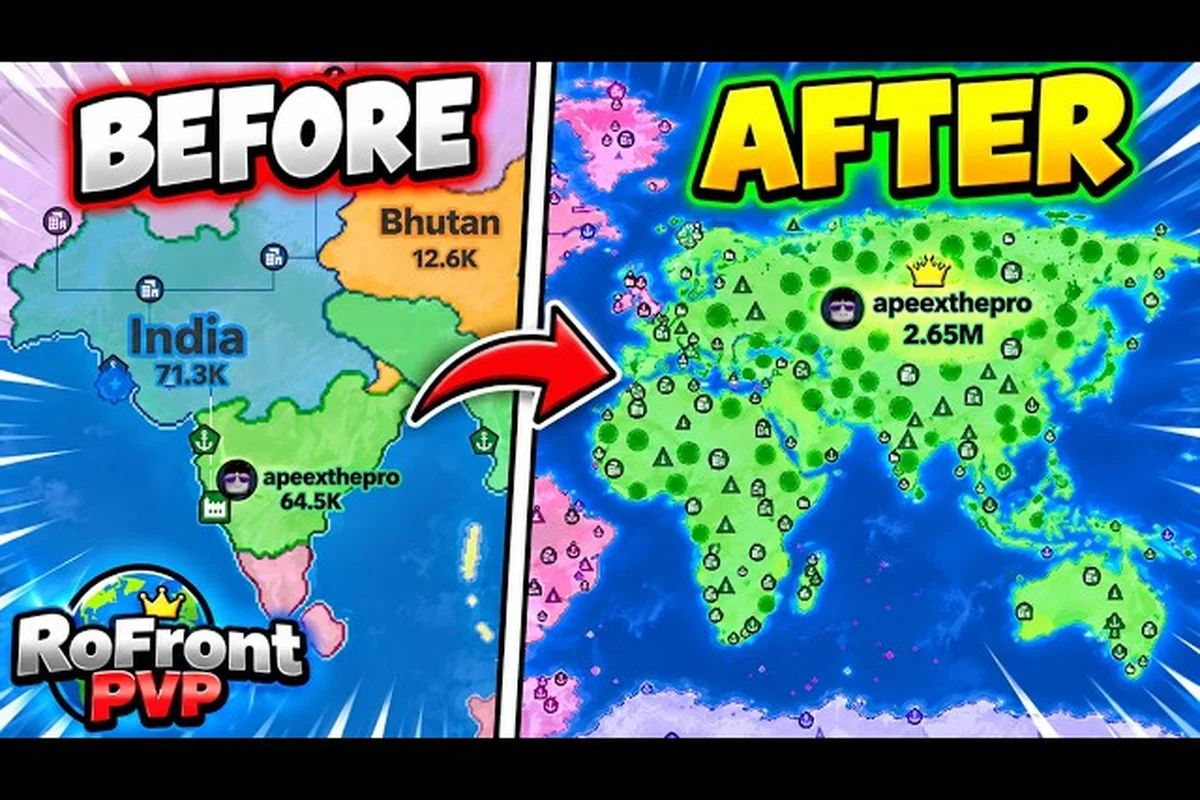
The roWorld mediterranean map turns geography into a strategic constraint for every early expansion decision. Comparing the five community-reported routes is useful because coastal movement, narrow land corridors, and resource hubs determine which capitals can be secured without overextending. A Gibraltar-to-Mediterranean route, for example, should be evaluated against nearby capital access and chokepoint exposure rather than treated as a simple distance race. Identifying strong capital positions first helps establish a defensible regional network, reducing the risk of becoming isolated from allies, supply lines, or reinforcement routes.
roWorld mediterranean map: what the five routes reveal
The roWorld mediterranean map is best understood through its landmarks and movement corridors rather than a single dominant spawn. The official RoWorld game page confirms that the strategy game supports cities, ports, factories, alliances, and territorial control, but it does not publish a verified regional map roster. As a result, the five routes discussed here come from community reports and should be treated as player observations rather than an official feature list.
| Route | Geographic anchor | Main strategic question | Best early priority |
|---|---|---|---|
| Gibraltar | Narrow sea passage | Can one capital control nearby crossings? | Secure a defensible coastal capital |
| Clearwater Lakes | Lake-centered region | Does inland access compensate for exposed borders? | Balance expansion with transport access |
| Cape Cod | Coastal peninsula | Can land pressure be balanced across several edges? | Claim a compact coastal foothold |
| Los Angeles | Urban Pacific hub | Does a dense region favor fast consolidation? | Protect core infrastructure |
| Montreal | Inland metropolitan region | Can river corridors support measured expansion? | Link nearby territory efficiently |
Each option creates a different opening problem in the roWorld Mediterranean map: Gibraltar turns the Strait of Gibraltar into a chokepoint where a capital can influence nearby crossings, while Clearwater Lakes makes inland transport access as important as border exposure. Cape Cod tests control across several coastal edges, Los Angeles rewards fast consolidation around dense infrastructure, and Montreal relies on river corridors to link expansion efficiently.
Separating confirmed features from community routes
The strongest official fact is the match structure: the listing describes 88 player nations, hundreds of tribes, and a victory condition based on controlling 80% of the world. Servers can contain up to 55 players. These figures matter because crowded maps make bad borders more dangerous, even when a region appears quiet at the start.
| Information type | What is known | Confidence and use |
|---|---|---|
| Core game systems | Cities, ports, factories, alliances, and nuclear weapons are listed | High; use as official context |
| Match scale | Up to 55 players per server | High; official listing |
| World representation | Real country names appear on the full world board | High; confirmed by the available listing and player reports |
| Regional boards | Gibraltar, Clearwater Lakes, and other named boards appear in community recordings | Medium; verify in the current server |
| Exact spawn ratings | No official tier list or numerical spawn ranking | Low; avoid presenting claims as facts |
That distinction prevents an important error: calling a community-reported board “official” or inventing numerical advantages for the roWorld Mediterranean map. With 55 players per server competing for 80% world control, regional geography affects access to cities, ports, factories, alliances, and nuclear weapons. A Mediterranean position may connect several land and sea routes, but its practical value still depends on nearby players, tribal pressure, and whether a Strait of Gibraltar route remains open. The useful question is therefore not which region has a secret win rate, but which geography gives a player more options before opponents interfere.
Five routes, five different expansion problems
The Gibraltar Route compresses movement into a small number of crossings, making nearby capitals unusually important. The Clearwater Lakes Route adds water and inland connections, so expansion can become a balancing act between transport hubs and land corridors. The Cape Cod Route creates a coastal stronghold with several possible contact points, while the Los Angeles Route emphasizes a concentrated urban core. The Montreal Route rewards players who can connect separated zones without overextending their borders.
These are not simple rankings. A concentrated map may punish slow players, but it also lets coordinated nations consolidate quickly. A wider route can offer more unused land, although that advantage disappears if the player neglects one flank. Use the broader RoWorld map guide to review board-selection principles before committing to a route.
Comparing the five landmark starting regions
The five reported boards differ less in their individual scenery than in the decisions they force on a capital. A narrow strait creates congestion and high-value targets, while an urban region produces a larger central objective but also attracts attention from several directions. The correct start therefore depends on whether the player intends to expand quickly, build a balanced border, or use a secure position to support an alliance.
| Starting region | Border pressure | Expansion style | Main advantage | Main risk |
|---|---|---|---|---|
| Strait of Gibraltar | Concentrated around crossings | Controlled and compact | Strong influence over nearby routes | Early congestion and contested capitals |
| Clearwater Lakes | Mixed around water and land | Measured, linked growth | Multiple interior corridors | Accidental isolation or weak coverage |
| Cape Cod | Coastal edges create distinct fronts | Balanced footholding | Natural defensive sides | Bottleneck pressure within a peninsula |
| Los Angeles | Dense settlement creates a central prize | Fast consolidation | Strong infrastructure focus | Becoming surrounded before expansion |
| Montreal | Inland routes favor connected territory | Deliberate regional growth | Room to link neighboring zones | Slow starts and fragmented borders |
Gibraltar and Clearwater Lakes: the corridor comparison
Community reports identify a Strait of Gibraltar board and a Clearwater Lakes board, but the official listing does not explain their dimensions, bonuses, or spawn rules. That makes geometric reasoning the safest approach. A capital beside a narrow crossing may influence several neighboring landmasses, yet it can also become trapped between rivals seeking the same route. Clearwater terrain offers more ways to move through the region, although water and disconnected borders may prevent an easy sweep.
The community-reported roWorld strait of gibraltar map therefore suits players who value concentration and quick decisions. The roWorld clearwater lakes map appears more suitable for a builder who wants several expansion directions and can protect a capital’s rear area while claiming the next zone. Neither board has a published official advantage rating.
| Early decision | Gibraltar approach | Clearwater approach |
|---|---|---|
| Capital placement | Favor a position controlling a useful crossing | Favor a central point with several viable links |
| First expansion | Secure the nearest viable side, then inspect the opposite shore | Claim one connected zone before testing distant territory |
| Threat response | Watch neighboring capitals around the same route | Watch both inland borders and water access |
| Best temperament | Decisive and alert | Patient and geographically aware |
Cape Cod and Los Angeles: the coastal comparison
The community-reported roWorld cape cod map presents a compact coastal problem. Several directions of approach may exist, yet the available space can limit where a player can retreat after a mistake. Strong play comes from choosing a capital that prevents enemies from reaching multiple fronts at once, then using nearby land to create a coherent defensive shape.
By contrast, the roWorld los angeles map represents a dense metropolitan style of opening. A major city area can make infrastructure and surrounding territory valuable, but it also creates a conspicuous objective. The safest approach is to identify the smallest defensible core, secure nearby connections, and expand before distant rivals can surround the center.
| Factor | Cape Cod | Los Angeles |
|---|---|---|
| Starting pressure | Coastal confinement | Urban competition |
| Preferred capital | Balanced between sea safety and land access | Protected but connected to nearby growth |
| First target | Adjacent land that completes the defensive shape | Nearest infrastructure and useful urban connections |
| Common mistake | Expanding along one side only | Taking distant territory before securing the core |
| Community confidence | Medium | Medium |
Neither route should be called easier. The shape changes the problem, and the surrounding player count can change it again. Players should verify the board in the live server because regional availability may change even when the core rules remain stable.
Montreal and the inland connection problem
The community-reported roWorld montreal map creates a different challenge from the coastal boards. Inland geography can make every new connection more valuable because separated pockets may lack several land borders. A capital placed beside a useful corridor can support a series of controlled areas, but a poor opening may leave the player expanding in a line that can be pinched from both sides.
A practical Montreal opening starts with three questions. First, which neighboring zones can be reached without crossing a heavily contested junction? Second, can the capital remain connected if one outer area falls? Third, does the player have enough nearby territory to support a factory or port once such construction becomes relevant?
| Inland test | Strong result | Weak result |
|---|---|---|
| Connection quality | Several neighboring areas link naturally | Only one dependable route is available |
| Defensive shape | Enemy approach can be watched in advance | Enemies can enter from several sides |
| Expansion order | Nearby area followed by a second flank | One distant corridor before the center is secure |
| Long-term value | Territory supports mutual reinforcement | Pockets depend on vulnerable bridges |
For broader regional reasoning, the RoWorld world map strategy guide explains how continental positioning can influence expansion, while this route focuses on a compact metropolitan scenario. On the roWorld Mediterranean map, that means testing whether a coastal capital can secure adjacent territories before chasing the Strait of Gibraltar map’s wider sea routes, and whether factory and port sites remain mutually reinforcing rather than depending on a single vulnerable land bridge.
Strategic routes for the roWorld mediterranean map
The best route through the roWorld mediterranean map depends on the board’s geometry, nearby spawn density, and the player’s willingness to defend several fronts. Since no official spawn ratings exist, treat every rank below as a situational recommendation. The value comes from matching a capital position and expansion order to the board’s visible shape, not from claiming that one location has a guaranteed statistical advantage.
| Route | Best for | Opening plan | Important watch point |
|---|---|---|---|
| Gibraltar | Competitive players seeking a direct start | Place near a useful crossing, secure one side, then evaluate the opposite shore | Congestion around the same passage |
| Clearwater Lakes | Builders wanting several regional links | Build a connected interior core before chasing distant land | Water access and border coverage |
| Cape Cod | Defensive players who can manage limited space | Choose a balanced capital and complete the coastal perimeter | Pressure against one vulnerable side |
| Los Angeles | Players prioritizing fast infrastructure control | Secure the urban core, nearby resources, and one outward route | Becoming surrounded before expansion |
| Montreal | Patient strategists who value linked territory | Connect the nearest areas in sequence while preserving access | A long, thin defensive line |
Build a capital evaluation checklist
Before committing, inspect the surrounding land and water connections. Count the visible approaches rather than relying on labels. A capital with several routes can be valuable, but it can also be exposed when opponents arrive from separate directions. The checklist below helps compare positions using only information visible in the current match.
-
Approach count: Identify how many neighboring territories can pressure the capital.
-
Connection quality: Check whether each expansion direction leads to usable land rather than a dead end.
-
Centrality: Look for a position that can support two later expansions without creating a long, fragile chain.
-
Chokepoint value: Determine whether the route matters enough to justify early defense.
-
Resource reach: Observe nearby territory that may support cities, ports, or factories without requiring repeated distant moves.
-
Opponent spacing: Notice whether nearby players have already chosen conflicting directions.
The Gibraltar Chokepoint, Cape Cod Perimeter, and Montreal Link are descriptive evaluation labels rather than official map, strait, or city names. On the roWorld Mediterranean map, they mark strategic relationships between visible territories: a confined passage into the western Mediterranean, a coastal route around a peninsula, and a long connection toward inland expansion. These labels add no hidden combat bonus, resource yield, or territorial effect; they simply separate distinct approach-count, connection-quality, and chokepoint-value judgments when comparing a capital’s position.
Choose a deliberate expansion order
A workable opening has four phases. It begins with a capital check, moves into a compact defensive shape, expands into one useful direction, and then creates a second route before committing to distant targets. The order matters because early overextension is more dangerous on crowded maps than on isolated ones.
| Phase | Decision | Reason |
|---|---|---|
| Capital check | Compare approaches and nearby connections | Avoid choosing by landmark name alone |
| Local consolidation | Secure the closest useful neighboring area | Prevent immediate encirclement |
| First expansion | Take territory that supports the capital | Preserve reinforcement and infrastructure access |
| Second flank | Open a second route or border | Reduce dependence on one corridor |
| Regional reach | Push outward only after the core is coherent | Prevent distant expansion from becoming a liability |
The official page’s 55-player server cap gives this sequence additional weight. A quiet opening can fill rapidly, and a player surrounded on several sides may not have time to finish a large economy. Solid borders, useful cities, and working ports matter because they support the territorial game, but the listing does not provide their costs, production rates, or upkeep values.
Adapt when a route is contested
Contest conditions should alter the plan, not erase it. If several players cluster around one passage, shift toward the side with fewer immediate approaches instead of contesting the busiest junction. If a capital develops strong infrastructure but weak land access, secure nearby connectors before making a long move. If opponents remain distant, accelerate consolidation rather than expanding randomly.
| Situation | Adjustment | Reason |
|---|---|---|
| Chokepoint is crowded | Choose a less congested neighboring direction | Avoid entering a battle with little room to maneuver |
| Capital has few land borders | Prioritize a connector over distant territory | A sustainable network matters more than isolated land |
| Opponents are far apart | Claim a second flank promptly | Open space may disappear quickly |
| One side becomes exposed | Reinforce through a visible route | Preserve access to important areas |
| Interior is secure | Expand along the weakest contested border | Direct pressure toward the most likely opponent |
The RoWorld sea crossings guide adds useful context for judging whether a water route is genuinely convenient or simply looks narrow on the map. On the Mediterranean map, a short-looking crossing can still be a poor choice if its landing coast is crowded, the adjacent capital lacks infrastructure, or nearby connector provinces are already exposed. Compare the route’s actual destination value with the number of contested approaches: a slightly longer passage that reaches a secure, well-connected capital may support consolidation better than the shortest strait leading into a congested front.
Five practical route-planning scenarios
Five practical scenarios show how the same map becomes a different match when player density, terrain, and objectives change. Because RoWorld publishes no official route ranking, these cases avoid invented troop multipliers, building costs, income rates, and damage values. Instead, each scenario uses official systems—cities, ports, factories, alliances, and territorial control—alongside community-reported geography.
Scenario 1: The crowded strait opening
A player begins beside the Strait of Gibraltar while several capitals occupy the surrounding approaches. The strongest move is not automatically the most visible crossing. The player should compare which capital has the fewest direct threats, protect a useful side first, and avoid stretching toward the opposite shore before the local perimeter is stable.
Gibraltar Compression is useful here. It means placing the capital where one useful route supports early consolidation without leaving the rear open. If the crossing becomes heavily contested, the player can redirect toward a calmer neighboring area instead of treating the initial landmark as a permanent obligation.
Scenario 2: The quiet water network
On the Clearwater Lakes board, a player has space but faces disconnected borders. The main risk is accumulating territory that looks large on the map but cannot be defended cohesively. The player should favor a capital with several practical links and build outward in connected stages.
Lake Link Priority becomes the central idea. Every expansion should improve access between controlled areas, reinforce an existing route, or reduce the number of exposed borders. Water is a route only when it is practical for the player’s current position; a visually short crossing can still become strategically poor if it leads into a crowded corner.
Scenario 3: The compact coastal defense
A Cape Cod player wakes with a usable coastal capital and rivals close on multiple sides. The opening should prioritize a balanced capital rather than the most aggressive target. Once one neighboring area is secured, the next goal is to make the controlled shape difficult to attack from a single direction.
Cape Cod Perimeter describes the desired result. The player should watch for a rival who repeatedly appears in the same sector, because that pattern may reveal a predictable approach. A compact defense is not passive; it preserves enough territory to support cities, ports, factories, and later alliance commitments.
Scenario 4: The dense city contest
The Los Angeles route centers attention on a metropolitan objective. A player should identify the smallest coherent urban core, protect its links, and make nearby control part of the first expansion. Racing toward distant objectives can leave the center vulnerable to several opponents at once.
Urban Core Shielding prevents a common strategic mistake: treating central importance as permission to overextend. A capital may be valuable because it anchors the region, yet that value disappears if enemies can enter from unmonitored sides. The strongest early position is the one that protects its center while preserving at least one dependable expansion route.
Scenario Scenario 5: The fragmented interior
A Montreal player has several land links but little immediate coastal access. The strategy is to connect territory in a compact chain and avoid building a long, narrow strip. A second flank should be created before the outer reaches become too important to abandon.
Montreal Link Priority favors reinforcement over scattered conquest. If one distant area becomes difficult to protect, the player should redirect toward a neighboring interior zone that keeps the main network coherent. This approach fits a patient style and can be especially effective when the visible map contains fewer opponents near the center.
| Scenario | Main advantage | Main mistake | Corrective action |
|---|---|---|---|
| Crowded strait | Valuable local crossings | Fighting the largest crowd first | Redirect along a quieter approach |
| Quiet water network | Several possible links | Disconnected territorial sprawl | Expand in connected stages |
| Compact coast | Defendable perimeter | Covering only one side | Balance the surrounding borders |
| Dense city | Central infrastructure focus | Racing beyond the core | Secure nearby links first |
| Fragmented interior | Room for connected growth | Creating a fragile land chain | Build a second flank early |
Reading RoWorld map details without inventing bonuses
Reliable map analysis depends on distinguishing visible geometry from undocumented mechanics. RoWorld’s official listing supports core claims about the strategy format, player nations, territorial victory, cities, ports, factories, alliances, and nuclear weapons. It does not publish verified regional dimensions, spawn statistics, building costs, troop multipliers, income rates, or board-specific advantages. Any guide that fills those gaps with hard numbers without a current source should be treated cautiously.
| Detail | Verification status | Best use |
|---|---|---|
| Full world uses country names | Confirmed by available official and community materials | Discuss large-scale positioning |
| Regional boards such as Gibraltar | Community-reported | Describe visible layouts only |
| Victory at 80% world control | Published on the official page | Explain why consolidated borders matter |
| 88 player nations and 55-player servers | Published on the official page | Frame density and planning needs |
| Building prices and production output | Not officially published | Avoid numerical claims |
| Board-specific spawn ranking | Not officially published | Use conditional player assessments |
| Exact capital and troop multipliers | Not officially published | Compare roles and geometry, not values |
The creator’s official Roblox group is the only verified community channel found during research. Because there is no confirmed standalone patch archive, balance claims should be checked against the live game and its current game page rather than attributed to an unverified announcement.
A reliable evidence hierarchy
Use a simple hierarchy when evaluating any player tip. Official listing information establishes the rules and broad feature set. Verified community media can document what boards and routes appear in the current game. Individual player commentary can explain preferences, but it should be labeled as an observation. Anonymous numerical claims should never be converted into facts without a visible source.
This hierarchy is especially important for the roWorld strait of gibraltar map and other regional boards. A player may accurately describe a narrow crossing while incorrectly claiming a hidden production bonus. The visual fact can guide a spawn decision; the unsupported bonus should not affect it.
What the roWorld los angeles map says about urban starts
The roWorld los angeles map is useful because urban geography concentrates objectives. Players should look for capital positions that are central enough to support nearby growth but not so exposed that several directions remain unchecked. A visible city or infrastructure cluster may attract attention, so nearby defensive depth matters more than the landmark’s prestige alone.
Urban Core Shielding means treating the center as a foundation for growth, not as the entire strategy. A player who protects it with a coherent territory has more options when factories, cities, or ports become important. A player who expands around it without securing the links may find that the prestigious starting region is surrounded.
What the roWorld montreal map says about inland starts
The roWorld montreal map shifts attention toward connections. Inland starts can provide several directions, but the value of each direction depends on whether it leads to territory that can be supported. A player should compare the capital’s visible links and watch for opponents entering the same corridor.
Montreal Link Priority rewards a balanced sequence rather than a single explosive move. Build one local connection, evaluate nearby pressure, and create a second flank before stretching outward. The roWorld cape cod map and the roWorld clearwater lakes map can demand the same discipline for different reasons: Cape Cod because space is compact, Clearwater because water and land links may fragment the network.
Practical preparation for Mediterranean and community-reported boards
Preparation begins before the match starts. Players can learn a map faster if they arrive with a repeatable observation routine and avoid assuming that the first visible capital is the best one. The official game page describes a large strategic format, so even a short server can have a meaningful territorial contest. Preparation should focus on decision quality, not on memorizing an unsupported tier list.
-
Read the whole board: Compare the center with the edges before choosing a capital.
-
Mark the approaches: Identify every direction from which an enemy can reach your position.
-
Trace two expansions: Confirm that at least two nearby areas can be linked.
-
Watch player intent: Notice whether opponents move toward the same landmarks you want.
-
Protect the core: Secure nearby territory before accepting a distant target.
-
Keep an escape connection: Avoid a capital whose only route out passes through an obvious rival zone.
| Preparation step | Time to complete | Information gained |
|---|---|---|
| Scan the full board | Early match | Relative centrality and available space |
| Trace capital approaches | Early match | Border pressure and likely enemy paths |
| Compare two expansions | Before committing | Sustainability and route quality |
| Observe nearby players | During opening | Shared objectives and congestion |
| Secure the local shape | First expansion phase | Fewer exposed borders and stronger support |
| Recheck links after each move | Throughout the match | Changing chokepoints and enemy focus |
A player can improve quickly by making each move answer a visible question. If the capital has too many approaches, which neighboring zone removes one? If the enemy is concentrated, which alternative expansion avoids their direction? If the network is thin, where can the next connection strengthen the whole? This method transfers effectively to the roWorld mediterranean map even when a board’s name changes.
Frequently Asked Questions
Is the roWorld mediterranean map an officially listed board?
RoWorld’s official Roblox listing does not provide a complete regional board catalog. Gibraltar and the other routes covered here appear in community reports, so treat them as observed options that may vary by server or update. Always confirm which board is available in the live match before selecting a capital.
Which of the five routes is easiest for a new player?
None has a verified official difficulty rating, so the easiest route depends on the board and nearby players. A compact map rewards quick decisions, while a wider one rewards patient positioning. Compare capital approaches, visible connections, and opponent congestion rather than relying on a fixed spawn ranking.
Should a Gibraltar player expand across the strait immediately?
Not necessarily. A crowded crossing can expose a capital to several rivals before its position is stable. Secure a useful local side, preserve a dependable route, and inspect the opposite shore before committing. The community-reported roWorld strait of gibraltar map is best approached as a concentration game, not a mandatory race.
Do the Los Angeles and Montreal boards favor different playstyles?
Generally, yes. The community-reported roWorld los angeles map emphasizes protecting a concentrated urban core and preventing encirclement. The roWorld montreal map rewards connected inland growth and maintaining mutually supportive territory. Neither advantage is an official stat, so both should be tested against the actual spawn layout.
How do Clearwater Lakes and Cape Cod differ strategically?
Clearwater creates a water-and-land connection problem, while Cape Cod presents a compact coastal perimeter problem. In the roWorld clearwater lakes map, prioritize linked expansion and avoid disconnected pockets. In the roWorld cape cod map, balance surrounding borders and watch for pressure along the constrained coastline.