
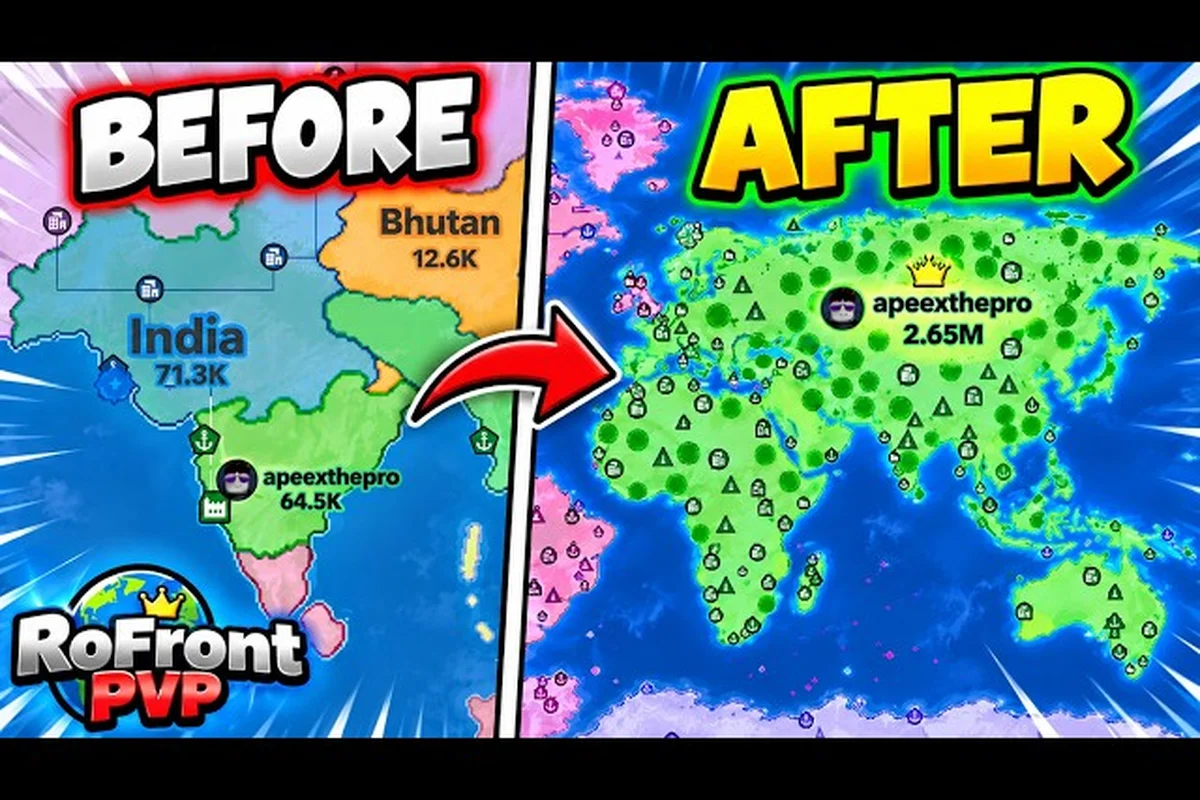
Understanding roWorld sea crossings can determine whether a new nation expands safely or becomes trapped between powerful neighbors. A strong roWorld map spawn needs open water for naval movement, useful land for early resource claims, and enough space around the roWorld capital placement to avoid immediate pressure. When reviewing roWorld map borders, compare coastal access with neighboring landmasses rather than judging distance alone; a shorter crossing may expose the capital to rival expansion, while a protected harbor can provide safer development. The best route therefore balances sea access, defensible borders, and room for the starting location to grow.
How RoWorld Sea Crossings Shape Your Opening
A sea crossing is valuable because it can function as a natural boundary, a route for naval movement, or a shortcut into territory that appears difficult to reach by land. In RoWorld, that value depends on the surrounding coast, the number of nearby land borders, and where you place your capital. A narrow strait may create defensible geography, while a broad bay can offer more room but expose your nation to attacks from several directions.
The official RoWorld game page on Roblox describes a world strategy match featuring cities, ports, factories, alliances, and nuclear weapons. It also lists up to 55 players in a server and says that controlling 80% of the world wins. These features make careful positioning important from the first minutes, especially because your initial capital becomes the center from which you claim territory and establish an economy.
Rather than treating a crossing as automatically good or bad, evaluate the route in context. The useful question is whether it supports the kind of nation you intend to build: a coastal power with ports, a land-focused power with secure borders, or an aggressive state that needs several expansion options.
| Crossing type | Geographic advantage | Main strategic risk | Best use |
|---|---|---|---|
| Narrow strait | Strong natural defense | Heavy pressure on one route | Protecting a capital near the coast |
| Wide bay | Multiple landing directions | Exposure across a long shoreline | Naval expansion and port development |
| Island chain | Separation from mainland rivals | Slow reinforcement between holdings | Building a protected outpost network |
| Coastal passage | Direct access to neighboring shores | Contested landing points | Claiming a second territory early |
| River mouth | Links interior and sea routes | Bottleneck around the estuary | Connecting an inland base with a port |
Coastal geometry is the first filter, but it is not a complete ranking. A crossing with several approach paths can be safer if your troops have not yet developed the strength to defeat a concentrated enemy. Conversely, a narrow strait can become dangerous if several rivals converge on it and prevent you from reinforcing your capital.
RoWorld Map Borders and the Chokepoint Problem
Land borders reveal how easily an opponent can reach your territory. A nation with several land neighbors needs more attention because each direction may demand construction, defense, and troop movement. A nation separated by water can sometimes devote more attention to its economy, but only if it can control the relevant shoreline and protect its ports.
This is where roWorld map borders become more useful than a simple list of adjacent countries. A border may be broad and diffuse, meaning an attacker needs several staging points, or narrow and direct, meaning one breakthrough could expose the capital. A sea crossing changes that geometry: the water is a gap, yet it can also be crossed by naval forces if the player develops ports and ships.
Stable Border Versus Narrow Chokepoint
A stable border gives you room to place defensive structures, watch several directions, and react without committing every available unit to one route. A narrow chokepoint concentrates defense, but it also concentrates risk. If the opponent captures the approach, your defensive advantage disappears because there may be nowhere else to place another building or another defensive position.
The best crossing usually combines these qualities: a controllable landing point, enough sea width to slow surface fleets, a second route that can absorb a failed landing, and inland room for a capital’s economy. For example, a coastal map spawn beside a harbor, a nearby island, and one narrow land approach is stronger than a wide-open shore where every enemy path converges on the same beach.
-
One clearly controlled route: You can see where an attack is likely to begin.
-
Secondary escape options: A second beach, port, or nearby island reduces the effect of a blocked crossing.
-
Adjacent empty land: Unclaimed territory gives you a buffer beyond the shore.
-
Limited land approaches: The water handles one side of the capital’s defense.
-
A defensible economic core: Ports, factories, and other structures should have room to grow without crowding the coast.
When reviewing roWorld map spawn choices, sketch the borders before choosing an exact tile. You are looking for the relationship between water, land, and available expansion space. A capital beside a large body of water is not automatically safe; if several land routes lead into the same narrow coastal zone, the coast may simply be another approach rather than a true defense.
When More Borders Are Better
More borders can be an advantage during the opening because they provide several places to claim territory. A nation with access to both coastline and inland land can establish an economy before committing to a single front. It can also choose which neighbors to observe, negotiate with, or avoid, depending on how the match develops.
The tradeoff is coordination. Every border consumes attention, and a player who expands in several directions can end up with disconnected buildings or a capital that cannot support new territory efficiently. RoWorld’s broader map strategy is therefore about controlled access, not maximum contact. The RoWorld map guide is useful for understanding how the world map and alternative boards fit into the broader match structure.
Choosing the RoWorld Best Spawn by Geography
The strongest roWorld best spawn is not a fixed nation or coordinate. It is the starting position that gives you the best combination of defensible borders, viable expansion, and enough room to build. Since official resources do not publish a universal ranked list of spawn points, any recommendation should describe geometry rather than claim unsupported numerical advantages.
Start by separating the map into three zones: your starting territory, the nearest unclaimed land, and the first neighboring powers. Your capital should be closer to the first two than to the third. That usually gives you time to establish production and claim a second area before committing to a confrontation.
| Spawn profile | Border pattern | Expansion access | Capital-placement advice |
|---|---|---|---|
| Coastal pocket | Water on several sides, few land approaches | Good local growth, limited shortcuts | Place the capital inland from the main landing point |
| River-side start | One inland border and water access | Balanced land and sea expansion | Avoid the estuary itself; secure both banks |
| Island start | Strong separation from mainland | Strong defense, slower reinforcement | Claim a nearby island before relying on overseas routes |
| Open-coast start | Long shoreline and multiple land neighbors | Wide expansion, higher exposure | Build a protected inland economic center |
| Central start | Many borders in every direction | Fast contact with rivals | Use only if your strength grows quickly |
This comparison also explains why the roWorld starting location should be evaluated before the nation’s cosmetic identity or general reputation. A strong military nation can overcome a poor opening, but a less aggressive player may benefit much more from a position with natural separation. For broader nation-selection context, the RoWorld nation list can help you compare starting identities before examining the terrain.
Coastal Starts With an Inland Retreat
A coastal start becomes easier to manage when your capital has a short inland fallback. If an enemy gains a landing point, you do not want every valuable building to be stranded behind the same beach. An inland center can protect farms, factories, and troop production while your ports handle naval movement.
A useful roWorld capital placement principle is to separate the capital from the contested shoreline without abandoning the coast. Put the capital where it can still support coastal expansion, but not where the first captured port exposes it to a direct attack. This is a visual and strategic relationship: one misplaced capital can turn a protected coastline into a vulnerable corridor.
Island Starts With Dependent Supply Lines
An island capital offers separation, but the surrounding water becomes part of its supply and defense system. Before committing to an ocean strategy, identify how you will move troops and resources between settlements. According to community reports, players often treat ports and controlled sea lanes as the foundation of overseas expansion, although no official RoWorld figures are published for construction costs, income, or naval strength.
The safer approach is to establish a second holding rather than remain entirely isolated. Two connected coastal areas create redundancy. If one port is pressured, the other can serve as an alternate landing or production center. One isolated position may look safe, but it can also become easy to contain if a stronger player controls the surrounding routes.
RoWorld Capital Placement Around Coastal Routes
Good roWorld capital placement does more than protect one structure. It creates a sequence in which nearby buildings, empty land, and sea routes support one another. Start with the capital, then identify which surrounding tiles would be valuable under pressure, and reserve paths between them before those paths become enemy territory.
Place the Capital Relative to Water
There are three broad approaches, each with a different strategic identity. An inland capital protects the core but can limit early access to ports. A coastal capital grants faster access to sea routes but may expose the core to naval landings. A staggered capital-and-port pattern offers a compromise because the capital remains protected while coastal infrastructure handles the maritime front.
| Capital position | Immediate benefit | Long-term problem to watch | Best early priority |
|---|---|---|---|
| Directly on the shore | Fast port and vessel access | Core may become the first landing target | Secure nearby land before expanding overseas |
| Slightly inland | More room for land defense | Slower access to maritime routes | Build a defensible route to a nearby port |
| Behind another landmass | Natural protection from sea attack | Delayed control of the coast | Claim the sheltered coast before rivals contest it |
| On a narrow peninsula | Strong sides and focused defense | Retreat options are limited | Control the landward approach early |
| At the mouth of a river | Access to interior and sea | Bottleneck can become a trap | Strengthen both sides of the route |
The capital’s location should also support your intended buildings. The RoWorld building placement guide explains how different structures can work together around an established capital, which is especially relevant when a coastal route serves as both a border and an economic connection.
Think in Functional Zones
Divide the nearby area into functional zones rather than fixed distances. The defensive zone contains the capital, key production, and fallback ground. The economic zone contains farms, factories, and supporting buildings with room to operate. The maritime zone contains ports and landing areas. The expansion zone contains unclaimed land that can absorb early pressure.
The exact mechanics and distances may vary by version, so this is a planning framework rather than a rule-based formula. Its advantage is that it works even without official cost or range data. It helps you ask whether a proposed capital position supports all four zones, and if one zone is missing, how you plan to obtain it.
Planning a Safe roWorld Sea Crossing Expansion
A useful roWorld sea crossing plan begins before the first crossing. It identifies a destination, assesses the route, and establishes what happens if the landing fails. Because the official page lists ports and world control as central features, maritime access can become strategically important, but the game does not publish a universal crossing ranking.
Pre-Crossing Checklist
Before moving beyond your starting territory, confirm that the departure point is worth risking: a sea crossing is safer when the starting location already has a working port, local resources, and a defensible capital to support supply lines. For example, a player crossing with only a remote shoreline and a weak capital may secure a beach but strand forces there, whereas a capital near productive coastal tiles can reinforce the landing and sustain later expansion.
-
The destination is not already surrounded: Look for a landing approach that is not already controlled by a stronger power.
-
Your route has a backup: A second landing area or island reduces the impact of a blocked beach.
-
Your capital remains stable: The crossing should not require moving your main economic center before the expansion is secure.
-
Your economy can support separation: New territory needs connections, and ports or supply routes may be required to avoid stranded forces.
-
Your enemy has a reason to notice: Crossing directly in front of a stronger rival’s capital can work only when it offers immediate strategic value or when conflict is already favorable.
| Crossing phase | Primary objective | Sign to wait | Best use of time |
|---|---|---|---|
| Observation | Learn the coast and border pattern | Several rival landings cluster nearby | Strengthen the capital and claim nearby land |
| Preparation | Build a secure departure point | The route lacks a second approach | Secure the local economy and nearby borders |
| First crossing | Establish a limited foothold | Landing points are heavily defended | Test a secondary route or negotiate |
| Expansion | Connect the new area to the main network | The enemy can cut the supply line | Add redundancy and alternate production |
| Consolidation | Turn the crossing into a stable border | Local territory remains isolated | Focus on borders, cities, and route control |
The strongest plan is adaptive. If a crossing is blocked, it may indicate that the route is heavily watched, not that the entire coast is unwinnable. Shift to a neighboring passage, reinforce the capital, and wait for a better distribution of enemy attention.
When to Expand by Land Instead
Skip the sea when land expansion is safer. A nearby unclaimed tile with fewer exposed approaches can produce a stronger position than a distant port. This is particularly true early, when your troop strength and economy are still limited. The objective is not to cross water for its own sake; it is to gain useful territory with manageable risk.
A broader approach to unit and faction priorities appears in the RoWorld current strategy overview, which can help determine whether your nation has enough strength to justify a distant crossing rather than a compact opening.
Common RoWorld Sea Crossing Mistakes
Most mistakes come from evaluating only the destination or only the water. Players may choose a beautiful coastline that lacks land, attack a port without securing a route back, or place a capital where every nearby tile becomes a funnel for the enemy. Avoiding these errors requires checking the entire local network.
Mistaking Isolation for Safety
A water barrier can delay an attack, but it does not guarantee protection. Naval development is part of RoWorld’s feature set, and ports can make overseas movement more relevant. A location that looks unreachable on the map may become strategically reachable once players establish a port and supporting routes. Treat water as a buffer with a duration, not as permanent immunity.
Ignoring the Landward Exit
A crossing that ends at a narrow strip of land may be harder to hold than a broad coastal area. Check what lies behind the intended landing. If one road connects every captured tile to the capital, the enemy may only need to contest that single area. Wider access gives you more defensive choices and more places to construct.
Spreading the Capital Too Thin
Placing many important structures across distant territory can make all of them vulnerable. Before expansion, decide which buildings remain close to the capital, which can occupy a secondary area, and which are worth postponing. The RoWorld best strategy tier list offers broader context on force and faction priorities, while this guide focuses on the geometry of your opening.
Treating Community Tips as Fixed Rules
Player experience is useful for recognizing patterns, but official RoWorld materials do not publish detailed building costs, troop multipliers, attack percentages, income rates, or upkeep values. Community reports can describe a successful route or a commonly observed tactic, but they should not be presented as universal rules. Always verify current behavior in your match.
A Practical RoWorld Sea Crossings Decision Path
A reliable decision path moves from broad geometry to local action. Begin with your available borders, identify your capital’s position, locate the nearest water route, and then assess the land behind it. Only after those steps should you decide whether to cross, where to place the capital, and which structures to prioritize.
Fast Evaluation Checklist
Use this sequence when selecting a roWorld map spawn: first trace the available sea crossings from the capital, then compare their landing sites, supply connections, and exposure to enemy naval movement. A broad channel may slow pursuit and create several viable landings, whereas a narrow strait can be sealed quickly, turning the first crossing into a trap. A strong roWorld starting location therefore combines defensible maritime access with usable inland space, rather than relying on a short route across water alone.
-
Count the land approaches: Many approaches mean more attention, but they can also provide multiple expansion paths.
-
Locate the water gap: A broad water boundary offers separation, while a narrow strait concentrates defense.
-
Find the unclaimed buffer: Open land near the coast gives you room to build before encountering a rival.
-
Check the retreat route: You should be able to move defense inward if the shoreline is lost.
-
Identify the second landing: A backup crossing makes the first landing less risky.
-
Match the capital to the plan: Coastal expansion needs a protected economic core and reliable port access.
| Question | Positive sign | Warning sign |
|---|---|---|
| Is the capital protected? | Several land routes or strong water separation | Every route converges on one narrow area |
| Is there room to grow? | Unclaimed land extends beyond the shore | The coast is only a thin strip |
| Is the crossing practical? | A landing area and supply connection are visible | The destination has no useful interior |
| Can the route be denied? | A second approach or defensible bottleneck | One enemy landing can block everything |
| Does the location match the nation? | Sea power gets ports; land power gets borders | The position forces an unsupported playstyle |
This framework also helps compare a roWorld starting location across different matches. A position that works because rivals are scattered may fail when every nearby nation expands toward you. Persistent geometry—number of approaches, available land, water separation, and route redundancy—provides the more dependable basis for a decision.
Frequently Asked Questions
What is the best location for a RoWorld capital?
The best location combines a defensible capital area with room for economic buildings and access to expansion. A slightly inland position near a coast often balances safety and port access, but the ideal choice depends on your land borders, nearby rivals, and whether your nation intends to expand by land or sea.
Are narrow sea crossings always the safest spawn?
No. A narrow crossing can create a strong chokepoint, but it also concentrates defense and may trap your capital if the enemy controls the approach. A broader coastal position can be safer when it offers multiple landing points, nearby unclaimed land, and an inland fallback for your core economy.
How do I identify the best roWorld map spawn before claiming land?
Inspect the surrounding water, count the land approaches, locate nearby unclaimed territory, and check for a second landing route. Compare those features with your nation’s strengths. Since official resources do not publish a fixed spawn ranking, geometric advantages are more reliable than claims about one universally superior coordinate.
Should an island start build its capital on the coast?
Not automatically. A coastal capital supports ports and overseas planning, but placing it directly on the landing point can expose your core. Many players use a slightly inland capital with a separate port route, although the best arrangement depends on the island’s size, available buildings, and nearby sea lanes.
How do I expand safely through a roWorld sea crossing?
Secure your capital and nearby land first, identify one primary and one backup landing, and make sure the destination has usable land behind it. Avoid committing when every enemy route points toward the same beach. The best time to cross is when your economy can support the new area and your rivals are divided rather than concentrated along your intended route.