
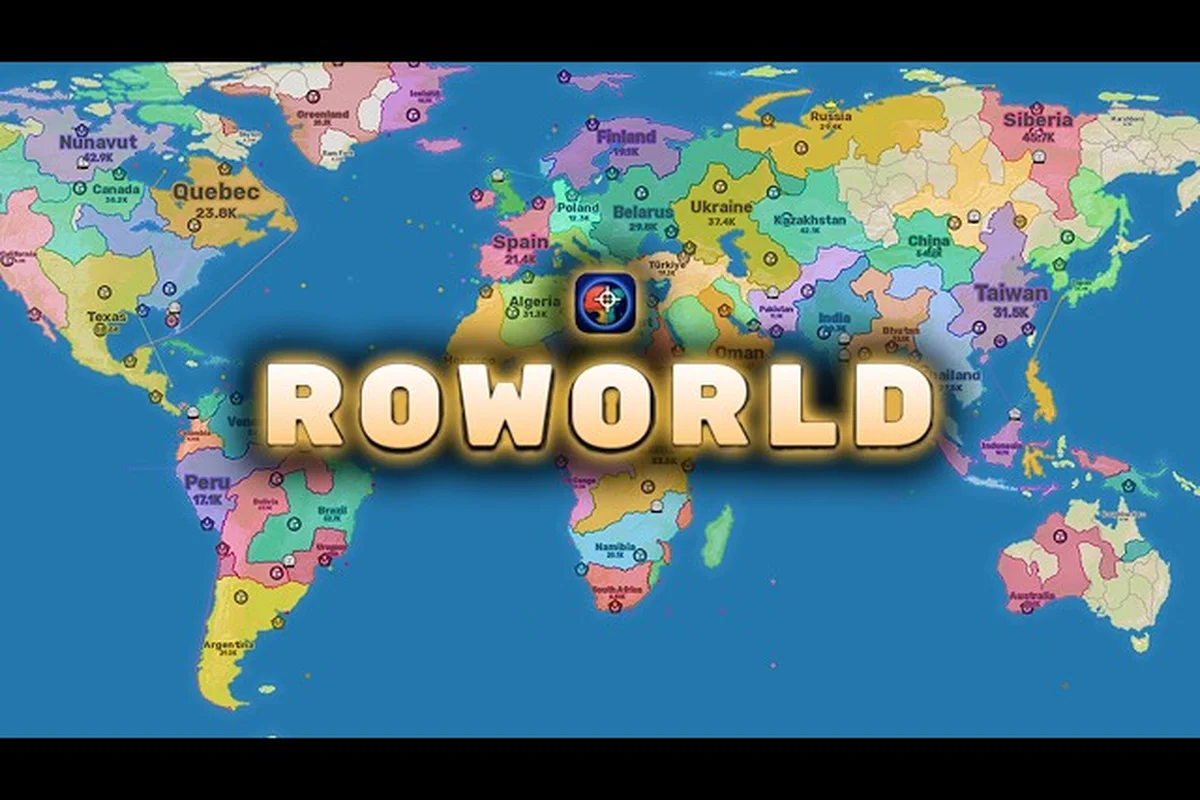
The roWorld best alliance tier list matters because coordinated action can turn a strong opening into lasting map control. Discover which national roles, borders, and economies belong in the roWorld top nations, without pretending official balance data exists. Treat that as a planning rule rather than a fixed statistic.
RoWorld alliance ranking framework
A useful roWorld best alliance tier list ranks strategic alliance types, not official team statistics. RoWorld’s verified Roblox materials describe 88 player nations, hundreds of tribes, cities, ports, factories, alliances, and nuclear weapons, with control of 80% of the world determining victory. They do not publish alliance win rates, troop multipliers, income values, or attack percentages, so any honest ranking must explain its criteria.
The framework below uses four observable qualities: territorial security, expansion room, economic breadth, and cooperation potential. A large nation can score well in one area and poorly in another, while a smaller alliance may offer better coordination. This makes the roWorld ranking guide useful for evaluating teams before, during, and after a match rather than attaching unsupported power scores to individual countries.
| Alliance factor | Strong signal | Weak signal | Strategic effect |
|---|---|---|---|
| Territorial security | Multiple protected interior routes | Narrow land corridor | Reduces the cost of defending members |
| Expansion room | Open frontier or safe coastal access | Enclosed by stronger neighbors | Creates room for coordinated land claims |
| Economic breadth | Cities, ports, and factories distributed | Assets concentrated in one exposed area | Helps members survive setbacks |
| Cooperation potential | Shared priorities and dependable communication | Unclear leadership or conflicting goals | Improves coordinated action |
| Defensive depth | Several settlement layers | One vulnerable capital area | Creates time to respond to attacks |
The tier placement is a strategic judgment, not a measured statistic. Players can use the broader roWorld current meta guide to see how openings shift when different nations, structures, and expansion routes dominate a server. Use it to choose the next move, then confirm details in the live match.
What the official information confirms
The official Roblox listing confirms the game’s core competitive structure: nations and tribes occupy the map, cities and ports support expansion, factories contribute to the war economy, and alliances organize cooperation. A server can contain as many as 55 players, while the stated victory condition requires controlling 80% of the world.
Those facts clarify why alliance quality is difficult to reduce to a single number. A group may have a large territory but weak borders, while a compact group may possess an excellent coastline, internal trade network, and dependable leadership. The same nation can also perform differently depending on its neighbors and the alliances it attracts.
Because the official source does not provide an alliance ranking, the tiers here remain transparent recommendations based on map position and coordinated play. The official Torrey Pines creator group is the verified community channel found during research, although patch details not shown on the game page should be treated as unconfirmed.
RoWorld best alliance tier list by strategic role
The S tier contains alliance archetypes that combine safe borders, expansion opportunities, and broad economic assets. These teams are not guaranteed to win; they simply create more useful choices when the match develops. Since RoWorld publishes no official balance data, the labels describe ideal conditions rather than fixed nation statistics.
| Tier | Alliance archetype | Core strength | Main weakness | Best early objective |
|---|---|---|---|---|
| S | Secure multi-front coalition | Harder to trap and easy to reinforce | Can become overextended | Establish a connected defensive belt |
| S | Coastal commercial alliance | Ports, trade access, and open routes | Exposed overseas borders | Secure maritime and inland nodes |
| A | Balanced national federation | Strong mix of territory and economy | Moderate commitment required | Standardize expansion priorities |
| A | Frontier expansion pact | Large room to claim unheld land | Harder to defend while moving | Create depth before confronting a major rival |
| B | Compact defensive pact | Clear borders and fast internal support | Limited room to grow | Absorb nearby space gradually |
| B | Specialized production alliance | Factories and cities support members | Vulnerable if supply lines fail | Protect production centers first |
| C | Opportunistic merger | Can form around a powerful leader | Weak if enthusiasm fades | Set written rules and goals |
| C | Defensive neighborhood pact | Useful against a nearby threat | Little influence beyond its region | Survive without long campaigns |
| D | Uneven temporary coalition | Can add short-term strength | Conflicting aims and unclear roles | Limit commitments and preserve options |
This roWorld power ranking emphasizes role fit. An S-tier coastal alliance can lose its advantage if the server pushes inland, while a C-tier neighborhood pact may become effective if its members share borders and share a common enemy. Players should therefore treat the tiers as a decision aid, not a permanent label.
S tier: secure and flexible coalitions
The strongest S-tier archetype is the secure multi-front coalition. It combines protected interior territory, several approach routes, and enough economic depth to support allies that need help. Its main advantage is that one successful attack rarely removes the entire alliance, which matters because RoWorld centers on territorial control rather than isolated combat victories.
The coastal commercial alliance earns the same tier for a different reason. Ports and accessible coastline can make expansion and logistics more flexible, but water routes do not remove the need for land defense. A coastal team that neglects inland borders can become isolated, so its members should connect valuable settlements through a defensible interior network.
A tier: strong structures with clear limits
A balanced national federation sits in A tier because it can perform several jobs at once: expand, defend, supply members, and project influence. Its weakness is coordination overhead. More member priorities can slow decisions, so the alliance needs a simple order for construction, defense, and large territorial pushes.
A frontier expansion pact also ranks in A tier because open space is a powerful strategic resource. It can absorb weaker neighbors and spread threats across several fronts, but forward settlements are harder to reinforce. This archetype works best when members first secure a dependable home region and then advance in a connected formation.
B to D tiers: usefulness depends on context
B-tier alliances are limited but dependable. A compact defensive pact can protect a small community effectively, while a specialized production alliance can give members a sound material foundation. Their weakness is scale: once opponents recognize their priorities, concentrated assets can become clear targets.
C-tier groups are situational, which is not the same as weak. A neighborhood pact may be perfectly effective against one nearby rival, and a temporary merger can end a difficult phase. However, their goals often depend on one leader, one shared enemy, or a short-lived crisis, so they lose reliability when circumstances change.
D-tier placements describe teams with the fewest safeguards: unclear borders, overlapping aims, no agreed priorities, or an expectation that numbers alone will decide outcomes. Such alliances can still surprise stronger groups, but they should negotiate narrow roles, avoid simultaneous commitments, and establish a withdrawal plan before any major operation.
RoWorld top 10 nations to watch in an alliance
The roWorld top 10 nations are not an official list of ten fixed countries. RoWorld contains 88 player nations, and a nation’s value can change as the map changes. The list below instead presents ten alliance-relevant national roles to monitor, based on capital security, coastal access, industrial assets, frontier position, and room for cooperation.
| Watch-list role | Alliance value | Ideal partner | Main caution |
|---|---|---|---|
| Secure inland anchor | Protects the coalition’s center | Coastal or expansion-focused members | May avoid risky frontier actions |
| Coastal connector | Links ports and inland settlements | Balanced inland federation | Can overextend its coastline |
| Factory hub | Supports allied production | Defensive neighborhood pact | Needs protection from focused raids |
| Capital fortress | Provides a resilient command center | Mobile expansion members | May be too slow to assist distant allies |
| Border nation | Warns the alliance of nearby threats | Nearby production members | Can be pressured from two directions |
| Frontier nation | Opens routes to unclaimed land | Secure inland anchor | Settlements can become isolated |
| Flexible middle power | Fills gaps between specialized roles | Almost any coalition | May lack a distinctive specialty |
| Resource-rich state | Supports cities and trade | Coastal connector | Assets can attract concentrated attacks |
| New-world foothold | Creates early expansion options | Experienced border nation | Vulnerable before the economy develops |
| Mobile coalition member | Reinforces multiple fronts | Central command structure | Harder to coordinate at long distance |
This approach prevents the roWorld top 10 nations request from becoming a misleading list of unsupported power ratings. The useful question is not “Which country is always strongest?” but “Which national role complements this alliance, and which weakness must the group cover?”
A complete roWorld nation selection overview can help players compare starting identities before the map develops. For alliance leaders, however, neighboring land, coastal access, and existing infrastructure usually matter more than a country’s reputation. That keeps expectations realistic whenever the board or patch changes.
Why position outranks reputation
A nation that holds an excellent central position may contribute more than a distant powerhouse because its borders influence many members. Conversely, a large nation located far from the coalition can still be useful if it specializes in a role the group lacks, such as production or mobile reinforcement.
Reputation also becomes unreliable after a major territorial shift. A team that once dominated one border may be forced inward, while a previously isolated nation can become central when surrounding territories change hands. This is why community clips and player reports are useful for identifying trends, but they should not be converted into permanent balance claims.
The most useful national combinations
The best alliance combinations distribute risk. An inland anchor paired with a coastal connector covers defense and access, while a factory hub joined to a mobile force can support production and respond to threats. A frontier nation gives expansion direction, but only when another member protects the route home.
Avoid grouping three nations that all need the same scarce resource or route. Their shared dependence can turn one successful enemy push into a cascading collapse. A better coalition has at least one member whose safety does not depend entirely on the others, creating time to recover when a border is breached.
RoWorld power ranking for border safety and expansion
Border safety and expansion room are the clearest strategic distinctions available without official statistics. A safe border can be defended efficiently because the alliance knows where attacks will arrive. Expansion space is valuable because it reduces pressure to fight for every neighboring territory at once.
| Map situation | Security rating | Expansion rating | Recommended alliance approach |
|---|---|---|---|
| Protected interior with several approaches | High | Low to moderate | Anchor the coalition and support outside members |
| Broad coastline with connected ports | Moderate | Moderate | Pair water access with an inland defender |
| Open frontier beside weaker neighbors | Low to moderate | High | Expand in depth before attacking a major power |
| Narrow corridor between strong powers | Low | Very low | Avoid overcommitment and seek an exit |
| Enclosed territory with balanced assets | Moderate | Low | Focus on internal development and diplomacy |
| Island or separated coastal position | Variable | Variable | Maintain redundant transport and defense routes |
The roWorld meta is therefore not one fixed build or nation, but a map-dependent contest among secure, expansive, commercial, and industrial positions. The strategy-focused tier list adds context for structures, troops, nuclear weapons, warships, and map priorities, all of which can change the value of an alliance.
Assess borders before choosing an ally
A border is safer when the attacker must pass through several owned settlements or approach a defended asset. It is less safe when a single road, shore, or neighboring claim can expose the interior. Alliance borders can also become safer when members place settlements in a staggered pattern rather than forming a perfectly continuous line.
Players should not assume that visual territory equals usable territory. An allied settlement without a secure connection may not support rapid reinforcement. Before joining a coalition, check where its members can reach one another, which assets sit near foreign powers, and what remains if the frontmost settlement falls.
Expansion should create options
A good expansion creates several plausible next moves. Moving into open frontier land may increase capacity, secure resources, and enlarge the defensive perimeter. Expanding only toward a stronger rival, however, converts a manageable border into a continuous emergency and drains attention from internal development.
An alliance should decide whether its next push seeks land, ports, factories, a strategic chokepoint, or a buffer against a neighbor. Each objective changes the best participants. A production nation may be more valuable beside factories than beside remote land, while a capital with strong defenses may suit another member’s desire for a protected base.
Build a fallback before the first crisis
Every coalition needs a fallback that does not depend on winning its largest battle. It might be a protected inland reserve, a secondary capital route, a mutually defended border, or a negotiated withdrawal. The point is not to concede automatically; it is to prevent one coordinated attack from deciding the entire match.
Community experience consistently points to a practical sequence: choose a starting nation, establish a capital, expand into unclaimed land, meet neighbors, build the economy, and then choose whether to fight or negotiate. Those observations support planning in phases, although they remain player experiences rather than published rules.
How to build a high-ranking RoWorld alliance
A high-ranking alliance is built through clear responsibilities, protected infrastructure, and disciplined expansion. Because the official listing identifies cities, ports, factories, alliances, and nuclear weapons as game features, coordination around those assets is essential, even though their exact costs and effects are not published.
| Alliance phase | Primary focus | Shared decision | Common failure |
|---|---|---|---|
| Foundation | Capital placement and immediate border | Which direction offers safe growth | Chasing a distant target too early |
| Organization | Member roles and communication | Who protects assets and who expands | Every member pursues a different goal |
| Expansion | Connected claims and economic growth | Where the coalition pushes next | Leaving gaps between members |
| Consolidation | Defense depth and redundancy | Which areas remain non-negotiable | Overextending during every operation |
| Late contest | Major rival coordination | When to commit or negotiate | Treating every battle as existential |
Use this sequence as a coordination checklist rather than a fixed build order. The map can force a faster defense or an earlier expansion, but the underlying priorities remain useful. If your coalition is still choosing a national identity, the nation rankings and selection criteria can help assess starting options without claiming unsupported power values.
Establish a small command structure
Large membership does not automatically create coordination. A workable structure needs one person who communicates current priorities, a small group that assigns roles, and a backup for each essential function. The structure can be simple, but it should prevent two commanders from ordering different operations or multiple members from claiming the same construction plan.
A written short-term plan helps because the game’s strategic situation can change rapidly. The plan should identify the protected center, the intended expansion direction, the most vulnerable border, and the condition that triggers a defensive response. Reviewing that plan after each major move keeps the alliance aligned without demanding constant micromanagement.
Give every member a role
Some members excel at diplomacy, others at defense, construction, production, or scouting. Assigning a primary role prevents valuable expertise from being spread too thin. A scout who identifies a weak flank can be more valuable to a large coalition than one more member who occupies a position without a clear purpose.
Roles should still overlap. If the only navigator cannot play, or the only factory specialist never receives support, the alliance may become fragile. Confirm backups and exchange positions regularly, especially before a major coordinated attack. A flexible arrangement lets the coalition respond to different server states without rewriting every rule.
Protect economic depth
Cities, ports, and factories should be treated as a network rather than isolated prizes. An alliance can lose one edge settlement and still function if interior routes connect the remaining assets, but a chain of exposed claims can collapse in sequence. Distribute critical construction across member territories and avoid placing every valuable project in the same predictable area.
The game does not publish building costs, production rates, or upkeep, so players should not plan around invented figures. Base decisions on what they can observe in the current match: which assets remain active, where threats are gathering, how long travel takes, and whether the alliance can reinforce a threatened member before it is isolated.
Negotiate when the map rewards peace
An alliance does not need to become hostile to every neighbor. When two groups share a border but lack the resources to conquer one another, negotiation can preserve both while they focus on other threats. The key is to make temporary arrangements explicit, especially around disputed land, joint attacks, and the withdrawal of a member.
Peace is not a sign of weakness if it buys time for stronger positioning. Conversely, refusing every negotiation can force the alliance into a war it cannot win. A good leader weighs the cost of a battle against the value of the land, the certainty of the result, and the possibility that another coalition is waiting for both sides to weaken.
Practical ways to improve alliance rankings
Improving an alliance ranking does not require a mysterious unit composition or hidden build. It requires removing obvious strategic weaknesses: overlapping goals, fragile borders, exposed economy, unclear leadership, and operations without fallback plans. These changes are measurable within a match even though official win-rate data does not exist.
| Weakness | Visible sign | Practical correction |
|---|---|---|
| Scattered leadership | Conflicting orders and duplicated work | Assign one communicator and functional leads |
| Fragmented borders | Gaps between members | Connect claims before extending outward |
| Overexpansion | Members constantly under attack | Set a protected core and expansion ceiling |
| Economy exposure | Key assets share one approach | Build redundancy and alternate routes |
| Unclear commitment | Members join only for major fights | Define minimum duties and shared goals |
| No exit plan | Coalition continues after defeat | Establish negotiation and withdrawal conditions |
The broader roWorld meta strategy reference is valuable when deciding whether to change direction, but the most reliable improvement often comes from confirming that allied settlements connect, roles are understood, and the core can survive one failed operation. Apply it first to the border that actually touches a rival nation.
Measure coordination before map control
Track practical indicators at the start of each phase: how quickly the alliance responds to a border alert, whether expansion orders reach every member, how many assets depend on a single route, and whether responsibilities remain clear after leadership changes. These are internal performance checks, not official statistics.
Avoid turning them into a rigid score that resembles an unsupported win-rate table. A strong response may take longer when members are far apart, while a fast response may still cover the wrong border. Interpret the indicators alongside the map, because terrain, distance, and current ownership determine what coordination can accomplish.
Know when to change the tier
An alliance may move from A to S behavior by improving border depth and member discipline without changing its nation. Conversely, a strong opening can fall when expansion creates disconnected territory. Review the tier after a major border loss, a leadership change, a new port or factory network, or a shift in neighboring alliances.
This makes the roWorld ranking guide a living assessment rather than a permanent label. The same coalition can move through several strategic tiers during one match, which is why the roWorld power ranking should be treated as a snapshot of current conditions.
RoWorld top 10 nations and the final strategic takeaway
The roWorld top 10 nations are best understood as roles that can strengthen an alliance: anchor, connector, factory hub, fortress, border state, frontier pioneer, flexible middle power, resource center, new-world foothold, and mobile reinforcement. No official evidence supports a universal power order among individual countries, and the game’s 88-nation roster leaves room for different builds to emerge in each server.
The roWorld best alliance tier list therefore rewards coordination that creates resilience. S-tier teams combine territorial depth, economic breadth, and useful expansion; A-tier teams are strong but have a clearer tradeoff; B-tier teams specialize; and C or D groups need stricter agreements and smaller commitments. The roWorld meta changes with the map, so players should reassess after major territorial shifts.
| Final check | Strong alliance answer | Warning sign |
|---|---|---|
| Why is this member included? | A defined role complements the coalition | Recruitment based only on size |
| What is the coalition protecting? | A clear core and vital assets | Every member protects something different |
| Where can it expand? | A route with depth and alternatives | A narrow march into stronger land |
| What happens after defeat? | Recovery and negotiation are prepared | Every loss risks total collapse |
| Is the ranking current? | It reflects the present map | It relies on an old reputation |
The final practical takeaway is straightforward: judge an alliance by its current geography, shared organization, and ability to recover, not by unsupported numbers. Pick roles that complement one another, protect connected territory, and make expansion reversible when possible. That approach gives the roWorld ranking guide lasting value even as the map, neighbors, and active roWorld meta change from match to match.
Frequently Asked Questions
What is the best alliance type in RoWorld?
The strongest archetype is a secure, multi-front coalition that combines protected interior territory with economic assets and several expansion routes. It performs well because members can reinforce one another and recover from a lost border. No official win-rate data identifies one universal best alliance, so map position remains essential.
Which RoWorld nations make the strongest partners?
The best partners fill a specific gap in the coalition: an inland anchor, coastal connector, factory hub, frontier pioneer, mobile reinforcement, or protected capital. A balanced group of six compatible nations can outperform a larger collection of similar roles. Judge partners by land, access, assets, reliability, and willingness to coordinate.
Does the roWorld best alliance tier list use official power rankings?
No. The tiers are transparent strategic recommendations based on border safety, expansion room, economic breadth, and cooperation potential. RoWorld’s official materials do not publish alliance win rates, national power scores, troop multipliers, income rates, or attack percentages. Consequently, the roWorld power ranking should be updated whenever map control and neighboring alliances change.
Is a small alliance able to compete with a large coalition?
Yes, if its members share borders, have clear responsibilities, and preserve defensive depth. A compact group can reinforce quickly and specialize in one role, while a large coalition may struggle with conflicting orders. The decisive advantage is coordination quality, although the official victory condition ultimately depends on controlling 80% of the world.
How often should players revise their roWorld ranking?
Revisit the ranking after a major border change, territorial breakthrough, leadership transition, or shift among neighboring powers. The roWorld top 10 nations can also change as ports, factories, and capitals fall. A frequent review helps because the same alliance may become safer, more isolated, or more valuable depending on the surrounding map.